 comparison
Regenerative Therapy vs Cortisone for Pain
Last Updated: October 25, 2026
Quick Summary
Regenerative therapy vs cortisone represent two distinct approaches to pain management: cortisone reduces inflammation quickly, providing relief within 24 to 48 hours and lasting 2 to 12 weeks, while regenerative therapies like PRP work more slowly but aim to support tissue repair, taking 2 to 4 weeks for relief that can last 6 to 12 months or longer.
- Cortisone injections are limited to 3 to 4 per year in the same joint to avoid weakening cartilage and bone over time.
- PRP recovery is straightforward with most patients resuming normal activities within a few days and avoiding strenuous activity for 2 to 8 weeks.
- Insurance typically covers cortisone injections when medically necessary but often classifies regenerative therapy as experimental or elective.
- Choose cortisone for acute pain needing fast relief; choose regenerative therapy if willing to wait for potentially longer-lasting results.
- Many patients benefit from a combination approach, starting with cortisone for immediate relief then pursuing regenerative therapy as a long-term strategy.
Table of Contents
- Regenerative Therapy vs Cortisone for Pain: Key Differences
- How Cortisone Injections Work and What to Expect
- How Long Does a Cortisone Shot Last
- PRP vs Cortisone Injection: Treatment Goals and Outcomes
- PRP Injection Recovery Time and Timeline
- Insurance Coverage for PRP Therapy and Regenerative Options
- Your First Visit: What to Expect and Common Questions
- Choosing Your Treatment: Which Option Fits Your Goals
- Start Your Consultation Today
- Frequently Asked Questions
Regenerative Therapy vs Cortisone for Pain: Key Differences
When chronic joint pain limits your golf swing or keeps you from enjoying pickleball in Lady Lake, you want relief that works, and works fast. Regenerative therapy vs cortisone injections represent two distinct approaches that promise pain reduction, but they work in fundamentally different ways and deliver very different outcomes. At Alpha Total Health, we've worked with residents across Lady Lake and The Villages to navigate this choice, and the decision often comes down to your timeline, your goals, and how long you want the relief to last.
Regenerative therapy and cortisone injections represent two distinct approaches to pain management. Cortisone injections reduce inflammation quickly, often providing relief within 48 hours. Regenerative therapies like platelet-rich plasma (PRP) work more slowly but aim to support the body's natural tissue repair process. The key difference: cortisone is anti-inflammatory, while regenerative therapy targets the underlying structural damage.
This comparison will walk you through exactly how each treatment works, what to expect during recovery, how insurance typically handles them, and which approach makes sense for your specific situation.
How Cortisone Injections Work and What to Expect
Cortisone is a corticosteroid that reduces inflammation and suppresses immune activity in the injected area. When inflammation is driving your pain, as it often is with osteoarthritis or bursitis, cortisone can provide rapid relief by calming that inflammatory response.
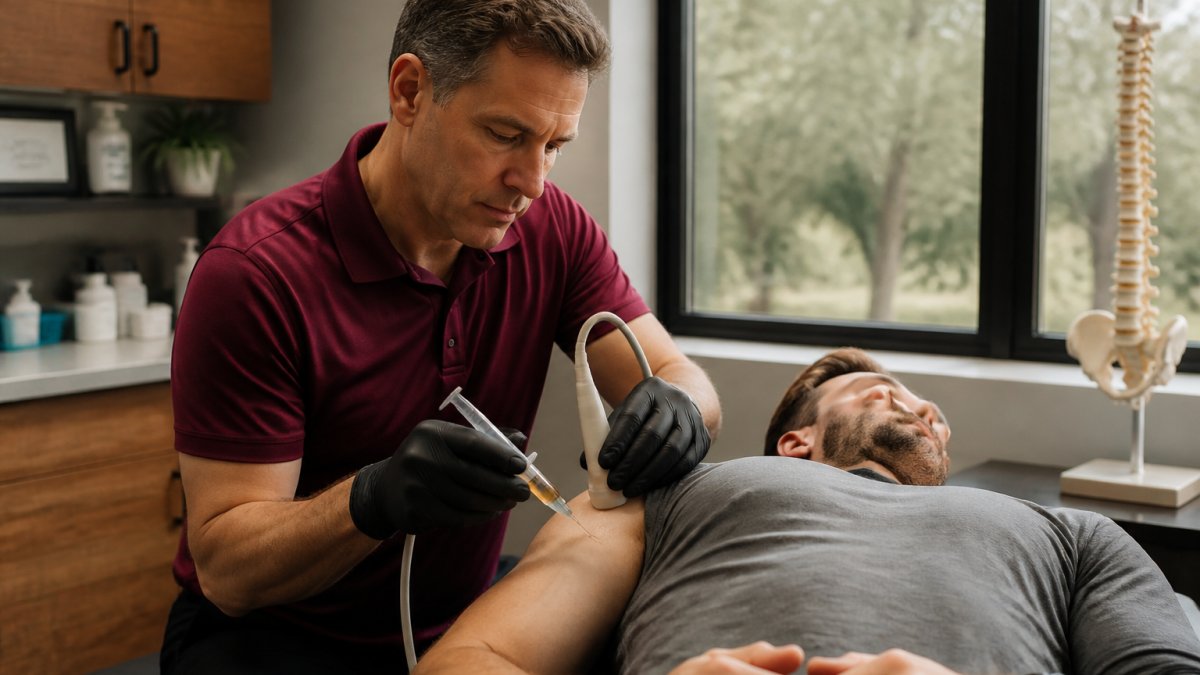
The injection itself takes just a few minutes. A healthcare provider uses ultrasound or fluoroscopy to guide a needle to the exact joint or tissue causing pain, then delivers the cortisone directly to the site. Most patients feel relief within 24 to 48 hours. For someone in Lady Lake dealing with acute shoulder pain before an important event, this speed is a major advantage.
The downside: cortisone doesn't repair anything. It reduces inflammation, but once the medication wears off, the underlying problem remains. That's why cortisone is typically considered a short-term solution, not a long-term fix for degenerative conditions.
How Long Does a Cortisone Shot Last
A cortisone injection typically provides relief for 2 to 12 weeks, depending on the joint, the severity of your condition, and how your body responds. Many patients experience peak relief around week two and gradual decline after that. Some people get 3 months of solid pain reduction; others see benefits fade after 6 weeks.
The catch: you can't get cortisone injections indefinitely. Most guidelines recommend no more than 3 to 4 injections per year in the same joint. Repeated cortisone use can weaken cartilage and bone over time, which is why your provider should space these injections carefully and monitor your joint health (pubmed.ncbi.nlm.nih.gov).
For retirees in The Villages managing multiple joints, this limitation becomes real fast. If you have pain in your knee, hip, and shoulder, you're already approaching your annual limit with just three injections.
PRP vs Cortisone Injection: Treatment Goals and Outcomes
Here's where the two approaches diverge most sharply: PRP vs cortisone injection represent opposite treatment philosophies. Cortisone suppresses inflammation to reduce pain. PRP aims to stimulate healing by concentrating growth factors and platelets from your own blood and injecting them into the damaged tissue.
PRP works by promoting the body's natural repair mechanisms. The theory is that growth factors in your blood can reduce inflammation over time and encourage tissue regeneration. Early research suggests PRP may help with certain conditions, but results are mixed and depend heavily on the specific condition and how the PRP is prepared (pubmed.ncbi.nlm.nih.gov).
The trade-off is timing. PRP doesn't work as fast as cortisone. You might not feel significant relief for 2 to 4 weeks, and full benefits can take 8 to 12 weeks to emerge. But if it works, the relief tends to last longer, potentially 6 to 12 months or more, compared to cortisone's 2 to 12 weeks.
For someone choosing between these, ask yourself: Do I need fast relief for an acute flare, or am I willing to wait a few weeks for potentially longer-lasting results?
| Treatment | How It Works | Speed of Relief | Duration | Best For |
|---|---|---|---|---|
| Cortisone | Reduces inflammation | 24-48 hours | 2-12 weeks | Acute pain, quick relief needed |
| PRP | Stimulates tissue repair | 2-4 weeks | 6-12 months | Chronic pain, willing to wait |
PRP Injection Recovery Time and Timeline
One advantage of regenerative therapy: recovery is typically straightforward. Most patients resume normal activities within a few days. There's usually mild soreness at the injection site, similar to a bruise, but nothing severe.
Here's a realistic timeline:
Days 1-3: Mild swelling and soreness at the injection site. Ice can help. Avoid strenuous activity.
Week 1-2: Soreness fades. Light activity is fine. You might start noticing subtle improvements, though most people don't feel major relief yet.
Weeks 2-8: This is the critical window. The PRP is working to reduce inflammation and stimulate healing. Avoid heavy lifting or intense exercise that stresses the injected joint.
Weeks 8-12: Most patients report noticeable improvement by this point. Full benefits may continue to develop.
The key: PRP recovery isn't about healing an injection wound, it's about allowing the injected tissue time to respond to the growth factors. That means avoiding activities that re-injure the area while the repair process is underway.
Insurance Coverage for PRP Therapy and Regenerative Options
Here's the reality: insurance coverage for regenerative therapy is inconsistent and often limited. Many insurance companies classify PRP and other regenerative treatments as experimental or elective, which means they don't cover them. Cortisone injections, by contrast, are well-established and usually covered when medically necessary.
Before pursuing PRP, check directly with your insurance provider. Learn more about insurance coverage for regenerative treatments to understand your out-of-pocket costs and appeal options. Ask specifically whether they cover PRP for your condition, knee osteoarthritis coverage differs from shoulder pain coverage, for example. Some plans cover it under specific circumstances; others don't cover it at all.
If insurance doesn't cover regenerative therapy, you'll pay out-of-pocket.
Cortisone injections are typically covered by insurance when a doctor documents medical necessity. That's one reason many patients start with cortisone, it's accessible and covered, even if it's not a long-term solution.
Your First Visit: What to Expect and Common Questions
When you come in for a consultation in Lady Lake, expect a thorough assessment. Learn how to prepare for regenerative therapy with actionable steps and recovery planning to optimize your outcomes. The provider will review your medical history, examine the painful joint, and likely order imaging (X-ray or ultrasound) to understand what's happening structurally.
Do you accept walk-ins? Most regenerative medicine practices work by appointment to ensure proper time for assessment and treatment planning. Call ahead to schedule your consultation.
Do you treat sciatica? Regenerative therapies can address some forms of sciatica. A consultation will determine whether regenerative therapy is appropriate for your specific sciatica.
Do you treat neuropathy? Yes. Neuropathy, nerve damage causing numbness, tingling, or burning, can sometimes be addressed through regenerative approaches. A thorough evaluation is needed to determine the cause and whether regenerative therapy is suitable.
What should I expect at my first visit? Your first visit typically includes a detailed history, physical examination, and discussion of imaging results. The provider will explain your diagnosis, discuss treatment options (including cortisone, PRP, and other regenerative approaches), and outline what recovery looks like for each option. You'll leave with a clear understanding of the plan and realistic expectations for outcomes.
Choosing Your Treatment: Which Option Fits Your Goals
The choice between regenerative therapy and cortisone comes down to three factors: your timeline, your goals, and how long you want relief to last.
Choose cortisone if: You need fast relief from acute pain. You're managing a flare before an important event. You want to avoid the cost of regenerative therapy. You've had cortisone work well for you in the past.
Choose regenerative therapy if: You're willing to wait 4-8 weeks for relief. You want potentially longer-lasting results. You've had multiple cortisone injections and are approaching the annual limit. You prefer an approach aimed at tissue repair rather than inflammation suppression. You're dealing with chronic, degenerative conditions and want to explore options beyond cortisone.
For many patients in Lady Lake and The Villages, the real answer is both, a combination approach. Start with cortisone for immediate relief during an acute flare, then pursue regenerative therapy as a longer-term strategy.
The key is working with a qualified provider who understands your specific condition and can recommend the approach, or combination of approaches, that makes sense for you. Learn how to choose a regenerative medicine clinic that meets your needs and has the expertise to guide your treatment.
Start Your Consultation Today
Chronic pain doesn't have to be permanent, and you don't have to choose between fast relief and lasting results. At Alpha Total Health in Lady Lake, we combine 29+ years of clinical experience with advanced regenerative therapies to create a treatment plan tailored to your goals. Whether you're recovering from an old injury, managing osteoarthritis, or dealing with neuropathy that's limiting your mobility, we'll help you understand your options and get you back to the activities you love.
The New Patient Consultation Package is designed to give you a complete picture of what's happening and exactly what comes next. No pressure, no guesswork, just a clear path forward.
Frequently Asked Questions
What is the difference between regenerative therapy and a cortisone injection?
Cortisone injections reduce inflammation and provide rapid pain relief, typically working within 48 hours. Regenerative therapy, including PRP treatments, aims to support your body's natural tissue repair and healing processes over time. Cortisone offers short-term symptom relief, while regenerative therapy targets longer-term joint health and tissue restoration. Your provider can help determine which approach aligns with your pain level and recovery goals.
How long does pain relief from a cortisone shot last?
Cortisone injection relief typically lasts 6 to 12 weeks, though individual results vary based on the condition severity and injection site. Some patients experience relief at the shorter end of this range, while others benefit for the full 12 weeks. Multiple cortisone injections in the same joint are generally limited to prevent long-term tissue damage. Discuss your timeline and any previous cortisone treatments with your provider to plan the best approach for your situation.
Is regenerative therapy covered by insurance?
Insurance coverage for regenerative therapy like PRP varies significantly by plan, insurer, and whether the treatment is considered experimental or established. Many insurance companies currently classify PRP as investigational, which may limit coverage. Some plans cover it for specific conditions or only when conservative treatments have failed. Contact your insurance provider directly with your specific diagnosis and treatment plan to confirm coverage. Alpha Total Health can also help you understand your options during your consultation.
What conditions do you treat, and do you accept walk-ins?
Alpha Total Health treats a range of conditions including sciatica, neuropathy, chronic joint pain, degenerative conditions like osteoarthritis, and soft tissue injuries using both chiropractic care and regenerative therapies. For the most accurate information about which specific conditions are best suited for our treatments, contact Alpha Total Health directly or schedule your New Patient Consultation. Our team can assess your individual needs and create a personalized treatment plan.
What should I expect at my first visit to a regenerative therapy clinic?
Your first visit typically includes a detailed health history, physical examination, and discussion of your pain and goals. The provider will assess whether regenerative therapy or cortisone is appropriate for your condition. Imaging or diagnostic tests may be recommended. You'll learn about treatment options, recovery expectations, and costs. Alpha Total Health offers a New Patient Consultation Package designed to introduce you to our approach and help determine the best treatment path for your specific needs.
The choice between regenerative therapy and cortisone isn't one-size-fits-all. Your age, your condition, your timeline, and your goals all matter. At Alpha Total Health, we've helped hundreds of residents in Lady Lake and The Villages navigate this decision and find relief that works for their lives. Schedule your consultation today and discover which approach, or combination of approaches, is right for you.