 how-to
How to Choose a Regenerative Medicine Clinic
Table of Contents
- Understand What Regenerative Medicine Clinics Offer
- Verify Regenerative Medicine Provider Credentials
- Evaluate the Clinic's Experience and Track Record
- Questions to Ask a Regenerative Medicine Provider
- Assess Regenerative Medicine Treatment Effectiveness
- Understand Regenerative Medicine Treatment Risks
- Evaluate the Consultation Experience
- Red Flags to Watch For
- Conclusion
- Frequently Asked Questions
Last Updated: October 20, 2026
Understand What Regenerative Medicine Clinics Offer
Regenerative medicine is a medical approach that uses your body's own healing capacity to repair damaged tissues and joints (Stem Cells Applications in Regenerative Medicine and Disease Therapeutics). Instead of just masking pain, these treatments stimulate your body's natural repair processes. Common regenerative therapies include platelet-rich plasma (PRP), stem cell treatments, and other advanced techniques designed to address the root cause of your pain (Stem-cell therapy and platelet-rich plasma in regenerative medicines).
At Alpha Total Health in Lady Lake, we focus on regenerative medicine treatments that work with your body's biology. These aren't quick fixes. They're designed to create lasting improvement by helping your tissues heal from the inside out.
The key difference between regenerative medicine and traditional approaches is fundamental. Many people try pain medications or physical therapy first. Those help some people, but they don't address the underlying tissue damage. Regenerative medicine targets the actual problem.
Here's what you should know before choosing a clinic:
- Regenerative treatments require proper diagnosis and planning
- Not every condition responds equally to these therapies
- Results take time, healing happens over weeks and months, not days
- Your age or condition history doesn't automatically disqualify you
Understanding what regenerative medicine can and cannot do is your first step toward learning how to choose a regenerative medicine clinic.
Verify Regenerative Medicine Provider Credentials
The credentials of your regenerative medicine provider matter more than you might think. This isn't the place to accept "close enough."
Look for these specific qualifications:
- Medical license: Your provider should hold a valid medical license in Florida. Check the Florida Department of Health website to verify.
- Specialized training: Ask whether your provider has completed formal training in regenerative medicine techniques, not just a weekend seminar.
- Board certification: Some providers pursue board certification in regenerative medicine or related fields. This shows commitment to the specialty.
- Years of clinical experience: A provider with years of hands-on experience has seen more cases and complications than someone brand new to regenerative medicine.
Alpha Total Health brings over 29 years of clinical experience to regenerative medicine care. Our founder-led approach means you're working with someone who built their practice on these principles, not someone trying it as a side offering.
When you call a regenerative medicine clinic, ask directly about credentials. A good clinic will answer without hesitation. If they're vague or defensive, that's a red flag.
Evaluate the Clinic's Experience and Track Record
Experience matters. A clinic that has been performing regenerative medicine treatments for years has learned what works and what doesn't. They've also developed systems to handle complications and adjust plans when needed.
Ask about the clinic's specific experience with your condition. If you have knee arthritis, ask how many knee cases they've treated. If you have a shoulder injury, ask about their shoulder treatment volume. A clinic that sees everything equally may not have deep expertise in your particular issue.
The track record of a regenerative medicine clinic includes:
- How long they've offered these specific treatments
- How many patients they've treated with your condition
- Whether they track patient outcomes and can share results
- How they handle cases that don't improve as expected
In Lady Lake, patients deserve clinics that have invested in understanding their community's needs. Alpha Total Health has spent decades building expertise in the conditions that affect active retirees and those managing chronic pain.
Ask the clinic for examples of typical outcomes. Not guarantees, outcomes. A clinic confident in their work will share what patients typically experience.
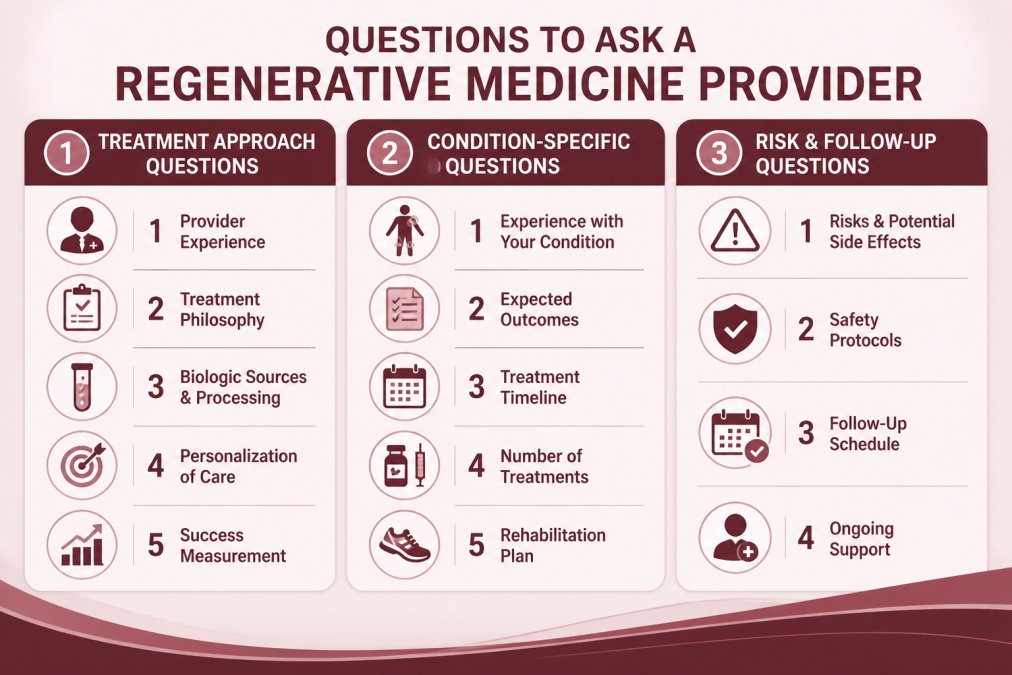
Questions to Ask a Regenerative Medicine Provider
Asking the right questions separates clinics that truly understand regenerative medicine from those just offering it.
Questions About Treatment Approach
Your regenerative medicine provider should clearly explain how they work.
Start with these questions:
- "How do you decide which regenerative treatment is right for my specific condition?"
- "What's your step-by-step process from diagnosis to treatment?"
- "Do you use imaging to guide your injections, or do you treat by feel?"
- "How many treatments does a typical patient need?"
- "What happens between treatments?"
The answers reveal whether your provider thinks through each case individually or uses a one-size-fits-all approach. The best regenerative medicine clinics customize treatment based on your specific situation.
Questions About Your Specific Condition
Your condition is unique. The clinic should treat it that way.
Ask these:
- "Based on my condition, why do you think regenerative medicine could help?"
- "What would you expect to see improve, and on what timeline?"
- "Are there any reasons regenerative medicine might not work for me?"
- "What happens if this treatment doesn't help?"
- "Do you have experience treating people my age with my specific issue?"
A good regenerative medicine provider in Lady Lake will answer honestly. They won't promise miracles. They'll explain both what's possible and what's uncertain.
Assess Regenerative Medicine Treatment Effectiveness
Effectiveness is what matters most. You want to know whether regenerative medicine actually works for your situation.
Ask the clinic how they measure results:
- Do they use pain scales before and after treatment?
- Do they track function (how much you can move, how much you can do)?
- Do they follow up with patients long-term?
- Can they show you data on their outcomes?
A clinic serious about regenerative medicine treatment effectiveness will have systems to measure whether patients improve. They should be able to tell you what percentage of patients see meaningful improvement, and on what timeline.
Beware of clinics that can't answer these questions. If they don't track outcomes, you have no way to know whether their regenerative medicine approach actually works.
Many patients ask whether results are permanent. The honest answer: regenerative medicine often produces lasting improvement, but it depends on your condition, your age, and how you use the treated area. Some people need occasional follow-up treatments. Others see improvement that lasts for years.
Understand Regenerative Medicine Treatment Risks
Every medical treatment carries risks. Regenerative medicine is no exception.
Common risks include:
- Infection at the injection site (rare with proper technique)
- Temporary increase in pain after treatment (common in the first few days)
- Allergic reaction to any substances used
- Nerve or blood vessel injury (very rare with guided injections)
- No improvement (the treatment doesn't work for you)
A trustworthy regenerative medicine provider will discuss risks openly. They'll explain how they minimize them. They'll tell you what to watch for after treatment.
Ask your regenerative medicine provider:
- "What are the specific risks for my condition?"
- "How do you prevent infections?"
- "What should I do if I have increased pain after treatment?"
- "When should I contact you if something doesn't feel right?"
Some people worry that regenerative medicine treatment might make things worse. That's a fair concern. A good clinic will explain how they monitor for this and what they'd do if it happened.
Evaluate the Consultation Experience
The consultation tells you a lot about the clinic. How they treat you during your first visit predicts how they'll treat you during ongoing care.
Pay attention to:
- Did the provider listen to your full story, or did they rush?
- Did they ask detailed questions about your condition and history?
- Did they explain things in language you understand?
- Did they answer your questions, or did they dismiss your concerns?
- Did the staff seem organized and professional?
A good regenerative medicine consultation in Lady Lake should feel thorough. You should leave understanding what they recommend and why. You should feel heard.
Red flags during consultation:
- The provider spends less than 15 minutes with you
- They don't ask about your medical history or current medications
- They push you to decide on treatment immediately
- They can't explain why regenerative medicine is right for you specifically
- They make absolute promises about results
Alpha Total Health offers a New Patient Consultation Package designed to introduce you to our approach. A proper consultation gives you time to ask questions and understand whether regenerative medicine is right for your situation.
Red Flags to Watch For
Some clinics cut corners. Knowing the red flags helps you avoid them.
Watch for these warning signs:
- Pressure to pay upfront: Legitimate regenerative medicine clinics don't demand full payment before treatment starts.
- No imaging or diagnosis: If they don't use imaging to guide treatment, that's a problem.
- Vague credentials: If the provider can't clearly explain their qualifications, keep looking.
- No follow-up plan: A good regenerative medicine provider checks on you after treatment. If they don't mention follow-up, that's concerning.
- Unrealistic promises: Anyone promising a cure or 100% success rate isn't being honest.
- Unwillingness to discuss risks: Every treatment has risks. A provider who won't discuss them isn't being transparent.
- One treatment for everything: If they recommend the same regenerative medicine treatment for every condition, they're not thinking carefully about your specific needs.
- No experience with your condition: If they haven't treated many cases like yours, they're learning on you.
Trust your instincts. If something feels off during your interaction with a regenerative medicine clinic, it probably is.
Conclusion
Knowing how to choose a regenerative medicine clinic is one of the most important healthcare decisions you'll make. The right clinic can help you avoid surgery and get back to the activities you love. The wrong one wastes your time and money.
Look for a regenerative medicine provider with real experience, clear credentials, and honest answers to your questions. Ask about their track record with your specific condition. Understand the risks and realistic outcomes. Pay attention to how they treat you during consultation.
At Alpha Total Health in Lady Lake, we've spent 29 years building expertise in regenerative therapies and chiropractic care. Our founder-led approach means you work directly with someone committed to your healing. We offer a New Patient Consultation Package to help you understand whether regenerative medicine is right for you. Schedule your consultation with Alpha Total Health to explore how regenerative medicine might help you manage your chronic pain and stay active in the lifestyle you love.
Frequently Asked Questions
What questions should I ask when choosing a regenerative medicine clinic?
Ask about the provider's credentials and licensing, their experience treating your specific condition, what evidence supports the treatment, potential risks and side effects, expected timeline for results, and how they'll monitor your progress. Request information about their training in regenerative techniques and whether they use advanced diagnostic tools. Also ask about their consultation process and whether they'll discuss alternatives if regenerative medicine isn't appropriate for your situation.
How can I verify a regenerative medicine provider's credentials?
Check that the provider holds a valid medical license through your state's medical board. Verify any certifications in regenerative medicine or related specialties through the issuing organizations. Ask about their continuing education in regenerative techniques and whether they're affiliated with recognized medical associations. Request information about their training background and clinical experience. A reputable provider will readily share this information and explain how their credentials relate to treating your condition.
What should I know about regenerative medicine treatment risks?
All medical treatments carry potential risks. Common considerations include infection, bleeding, nerve damage, or allergic reactions, depending on the treatment type. Some patients experience temporary increased pain before improvement. Ask your provider specifically about risks related to your condition and the proposed treatment. A trustworthy clinic will explain both potential benefits and realistic risks honestly, discuss how they minimize complications, and outline what to expect during recovery.
How do I know if a regenerative medicine treatment is actually effective?
Ask the clinic what research or clinical outcomes support the treatment for your specific condition. Request information about typical timelines for improvement and how they measure success. Be cautious of clinics promising guaranteed results or claiming 100% success rates. Effective clinics discuss realistic expectations, explain what factors influence outcomes, and describe how they'll track your progress. They should also be willing to discuss when a treatment may not be appropriate or when you might benefit from alternative approaches.