
 how-to
How to Prepare for Regenerative Therapy: A Complete Guide
Table of Contents
- Understanding Regenerative Therapy and Why Preparation Matters
- Medical History and Consultation: What to Prepare Before Your Visit
- Medications Before PRP Treatment and Other Drug Considerations
- Key Questions to Ask About Regenerative Therapy
- Pre-Treatment Lifestyle Adjustments and Physical Preparation
- Your PRP Treatment Preparation Checklist
- Regenerative Therapy Recovery Planning and Post-Treatment Care
- Setting Realistic Expectations for Your Results
- Conclusion
- Frequently Asked Questions
Last Updated: October 15, 2026
Understanding Regenerative Therapy and Why Preparation Matters
Regenerative therapy uses your body's own healing resources to repair damaged tissues and joints. At Alpha Total Health in Lady Lake, we've seen how proper preparation can make the difference between a good outcome and an excellent one.
Most people don't realize that how you prepare for regenerative therapy is just as important as the treatment itself. Your body needs to be in the best possible state to respond to the therapy. Think of it like preparing your home before renovations, the better your foundation, the better the results.
Here's what you need to know: regenerative therapy works by stimulating your body's natural repair mechanisms. When you prepare for regenerative therapy correctly, you're setting yourself up for faster healing and better long-term results.
The preparation process typically starts weeks before your appointment. This gives your body time to reach an optimal state. We'll walk you through every step so you feel confident and ready.
Medical History and Consultation: What to Prepare Before Your Visit
Gathering your medical records before your appointment is your first real step. Bring documentation of any previous injuries, surgeries, or ongoing conditions. This helps us understand your full health picture.
When you come in for your consultation, we'll ask detailed questions about your symptoms. Be ready to describe:
- When your pain or injury started
- What makes it better or worse
- Any treatments you've already tried
- How the condition affects your daily life
Your medical history matters more than most people think. If you have diabetes, heart disease, or autoimmune conditions, these affect how your body heals. Bring a list of all your current health conditions to your visit.
Don't forget to mention any allergies you have. We need to know about medication allergies and any reactions to numbing agents. This information keeps you safe during treatment.
Bring your insurance card and photo ID. Many people in Lady Lake ask about insurance coverage during their consultation. Having your card on hand lets us check your benefits right away.
Medications Before PRP Treatment and Other Drug Considerations
Certain medications can interfere with regenerative therapy. You'll need to stop taking some drugs before your treatment. This is one of the most important preparation steps.
Stop these medications at least one week before treatment:
- Aspirin and NSAIDs like ibuprofen or naproxen
- Blood thinners (warfarin, apixaban, rivaroxaban)
- Corticosteroids if possible
- Antibiotics that suppress inflammation
Talk to your regular doctor before stopping any prescription medication. Never stop taking heart or blood pressure medications without medical guidance.
Some supplements can also thin your blood. Stop taking these about five days before your appointment:
- Fish oil and omega-3 supplements
- Vitamin E in high doses
- Ginger and turmeric supplements
- Ginkgo biloba
- Garlic supplements
Over-the-counter pain relievers are especially important to avoid. They reduce inflammation, but regenerative therapy actually needs inflammation to work properly. Taking NSAIDs before or after treatment can reduce your results.
If you take medications for chronic conditions, write them down. Bring this list to your consultation. Our team can advise you on which ones to pause and which ones to keep taking.
Key Questions to Ask About Regenerative Therapy
Knowing what to ask during your consultation helps you make an informed decision. Come prepared with these important questions about regenerative therapy:
About the procedure itself:
- How long does the actual treatment take?
- Will I be awake during the procedure?
- What area of my body will be treated?
- How is the sample collected and processed?
About recovery and results:
- When can I return to normal activities?
- What should I expect in the first week after treatment?
- How long before I notice improvement?
- What does the recovery timeline look like?
About your specific condition:
- Is regenerative therapy appropriate for my injury or condition?
- What are realistic outcomes for someone my age?
- How many treatments might I need?
- What happens if the first treatment doesn't work?
About aftercare:
- What physical activities should I avoid?
- Will I need physical therapy?
- How should I manage pain during recovery?
- When can I return to golf or other activities?
Writing these down before your visit ensures you don't forget anything important. Many residents in Lady Lake come back and say they wish they'd asked more questions. Take notes during your consultation so you remember everything we discuss.
Pre-Treatment Lifestyle Adjustments and Physical Preparation
Your lifestyle in the weeks leading up to treatment affects your results. Making smart choices now sets you up for success.
Improve your nutrition:
Eat foods that support healing. Focus on protein, vegetables, and healthy fats. Your body needs good nutrition to repair tissue effectively. Cut back on processed foods and excess sugar, they slow healing.
Drink plenty of water. Staying hydrated helps your body function at its best. Most people don't drink enough water, especially in Florida's heat.
Get quality sleep:
Sleep is when your body does most of its repair work. Aim for seven to nine hours per night (the CDC). Poor sleep weakens your immune system and slows healing.
Reduce inflammation:
Avoid alcohol for at least one week before treatment. Alcohol increases inflammation and can affect your healing response.
Limit caffeine if possible. High caffeine intake can increase anxiety and affect sleep quality.
Stay active, but don't overdo it:
Light exercise is fine. Walking, swimming, or gentle stretching help maintain fitness without stressing your injured area.
Avoid heavy lifting or intense exercise. Don't push your painful area to the limit. Rest it as much as possible in the final week before treatment.
Manage stress:
Stress affects your immune system and healing response. Try meditation, deep breathing, or other relaxation techniques. Even ten minutes of calm breathing daily helps.
Your PRP Treatment Preparation Checklist
Use this checklist to track your preparation. Check off each item as you complete it.
| Preparation Task | Timeline | Status |
|---|---|---|
| Schedule consultation | 2-4 weeks before | ☐ |
| Gather medical records | 2 weeks before | ☐ |
| List all current medications | 2 weeks before | ☐ |
| Stop NSAIDs and blood thinners | 1 week before | ☐ |
| Stop supplements that thin blood | 5 days before | ☐ |
| Confirm appointment details | 3 days before | ☐ |
| Arrange transportation | 3 days before | ☐ |
| Avoid heavy exercise | 1 week before | ☐ |
| Get quality sleep | Night before | ☐ |
| Eat a healthy breakfast | Morning of | ☐ |
| Wear comfortable clothing | Day of | ☐ |
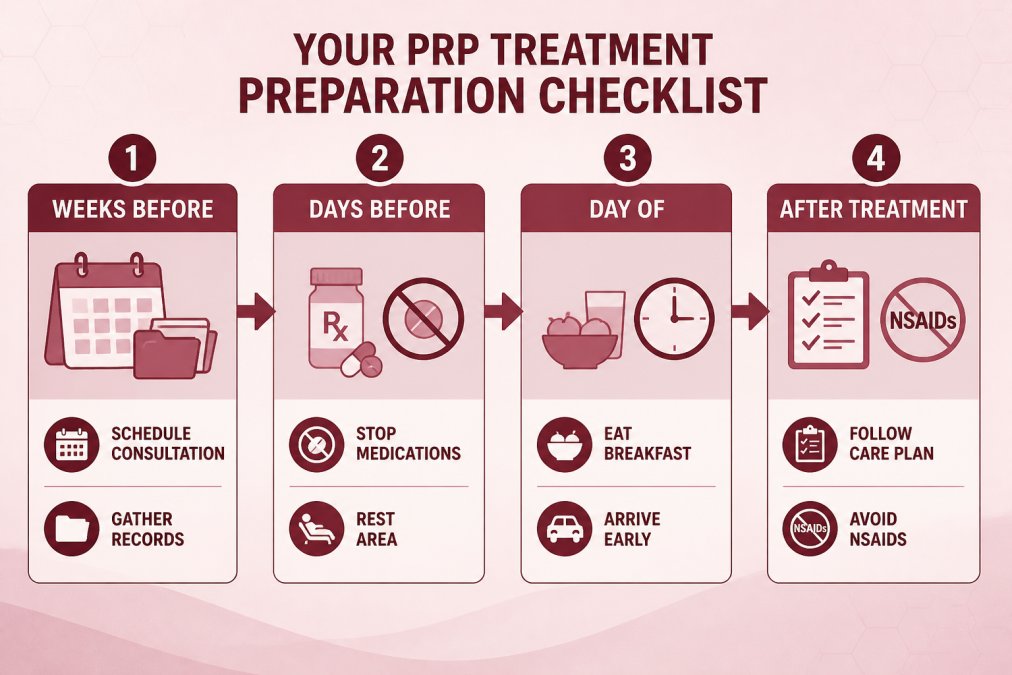
Print this checklist and post it somewhere visible. Check items off as you complete them. Having a visual reminder keeps you on track.
Regenerative Therapy Recovery Planning and Post-Treatment Care
Recovery planning starts before your treatment. Knowing what to expect helps you prepare mentally and practically.
The first 24 hours are critical:
Rest completely. Avoid any strenuous activity. Your body is beginning its healing response, and rest supports this process.
Ice the treated area for 15 minutes, four times daily. This reduces swelling without interfering with healing.
Take over-the-counter acetaminophen if you need pain relief. Remember: avoid NSAIDs. They can reduce your results.
Days 2-7 after treatment:
Gradually increase activity. Light walking is usually fine by day two or three. Listen to your body and don't push too hard.
Continue icing as needed. Swelling is normal and usually peaks around day three.
Avoid hot baths or saunas. Heat increases inflammation in the short term.
Weeks 2-4:
You can usually return to light exercise. Walking, swimming, and gentle stretching are good choices.
Avoid heavy lifting, running, or intense sports. Your tissue is still healing internally.
Physical therapy often helps. Ask during your consultation whether therapy would benefit your specific condition.
Beyond four weeks:
Most people see gradual improvement over the next two to three months. Healing isn't instant, your body needs time to rebuild tissue.
Some people notice results within weeks. Others take longer. Both are normal.
Schedule a follow-up appointment to discuss your progress. We'll assess how you're healing and adjust your care plan if needed.
Setting Realistic Expectations for Your Results
Understanding what regenerative therapy can and cannot do prevents disappointment.
Regenerative therapy is not a magic cure. It's a tool that helps your body heal itself. The results depend on many factors: your age, your overall health, the severity of your injury, and how well you follow post-treatment instructions.
Some people experience dramatic improvement. Others see gradual progress. Both are successful outcomes.
Results typically appear over weeks and months, not days. Your body needs time to build new tissue and repair damage. Patience is essential.
Not every treatment works perfectly for every person. If your first treatment doesn't produce the results you hoped for, we can discuss additional options during your follow-up visit.
Age is not a barrier. We've helped many residents in Lady Lake and The Villages who are in their 60s, 70s, and beyond. Your body's ability to heal doesn't stop at a certain age.
The goal is lasting relief and improved function. Many people return to activities they thought they'd lost forever, golf, pickleball, gardening, and enjoying time with family without pain.
Conclusion
Preparing for regenerative therapy properly gives you the best chance at success. Start your preparation weeks before your appointment. Gather your medical records, adjust your medications, improve your lifestyle, and come ready with questions.
At Alpha Total Health in Lady Lake, we guide you through every step of this process. Our team uses over 29 years of clinical experience to help you prepare properly and recover effectively. We're here to answer your questions and support your healing journey.
Ready to take the next step? Schedule your New Patient Consultation Package with us. We'll discuss your specific condition, answer all your questions about regenerative therapy, and create a personalized treatment plan designed for your needs and goals.
Frequently Asked Questions
What should I avoid before regenerative therapy?
Before regenerative therapy, avoid NSAIDs like ibuprofen and naproxen for 5-7 days prior, as they can interfere with the healing response. Skip strenuous exercise and heavy lifting for at least 3-5 days before your appointment. Avoid alcohol consumption 24 hours before treatment, and limit caffeine the day of your visit. Don't apply lotions or creams to the treatment area on the day of your appointment. If you're taking blood thinners or supplements like fish oil, discuss these with your provider beforehand.
Should I stop taking medications before regenerative therapy?
Don't stop any prescription medications without consulting your healthcare provider. However, certain medications may need adjustment. NSAIDs should typically be discontinued 5-7 days before treatment. Blood thinners and anticoagulants require special discussion with your provider. Bring a complete list of all medications, supplements, and over-the-counter products to your consultation so your provider can review them and give specific guidance based on your individual health profile.
What should I bring to a regenerative therapy consultation?
Bring your photo ID, insurance card, and any relevant medical records or imaging from the past 1-2 years. Have a written list of all current medications, supplements, and allergies. Bring details about your medical history, previous treatments, and what activities cause you pain. Wear comfortable, loose-fitting clothing that allows easy access to the treatment area. Prepare a list of questions about the procedure, expected outcomes, recovery time, and costs. Consider bringing a family member or friend for support during the consultation.
How do I prepare for regenerative therapy if I'm over 65?
Age alone doesn't prevent regenerative therapy from being effective. Focus on managing any chronic conditions like diabetes or heart disease with your primary care physician before your appointment. Bring all medications and supplements, as some may need adjustment. Ensure you have realistic expectations about recovery time, healing may take slightly longer than in younger patients, but regenerative therapies can still provide meaningful relief. Discuss any mobility limitations or balance concerns with your provider so they can tailor preparation and recovery instructions to your needs.