 ultimate-guide
7 Common Causes of Knee Pain in 2026
Last Updated: October 25, 2026
Quick Summary
Common causes of knee pain include traumatic injuries like ligament tears and meniscus damage, degenerative conditions such as osteoarthritis, biomechanical dysfunction from muscle imbalances and misalignment, and inflammatory conditions. These range from acute injuries that occur suddenly during sports or falls to progressive wear-and-tear that develops over years as the joint ages.
- ACL tears typically produce a popping sound, immediate swelling, and instability during rapid directional changes
- Osteoarthritis develops gradually as protective cartilage breaks down, causing stiffness after inactivity and progressive pain with activity
- Hip weakness and tight hip flexors force the knee to compensate, creating abnormal stress patterns that accelerate cartilage wear
- Meniscus tears can occur acutely from twisting or gradually from repetitive stress, causing catching, locking, or sharp joint line pain
- Home care including rest, ice, compression, and targeted strengthening exercises effectively manages mild to moderate knee pain
Table of Contents
- Understanding Common Causes of Knee Pain
- Common Knee Injuries That Cause Pain
- Knee Osteoarthritis Symptoms and Progression
- Degenerative Conditions and Age-Related Changes
- Biomechanical Factors Contributing to Knee Pain
- Knee Pain Relief at Home: What Actually Works
- When to See a Doctor for Knee Pain
- What to Expect at Your First Visit: Diagnosis and Treatment Options
- Frequently Asked Questions
Understanding Common Causes of Knee Pain
Knee pain affects millions of people across the United States, from active retirees in Lady Lake to younger adults managing chronic conditions. The causes range from acute injuries to progressive degenerative conditions that develop over time. Understanding what's driving your discomfort is the first step toward finding relief.
Common causes of knee pain in 2026 span several categories: traumatic injuries, degenerative joint disease, biomechanical dysfunction, and inflammatory conditions. Some develop suddenly after a fall or sports injury, while others emerge gradually as the joint ages or movement patterns create stress on specific structures.
The knee is a complex hinge joint that bears significant load during daily activities. When any component, cartilage, ligaments, tendons, or bone, becomes compromised, pain signals follow. What makes knee pain particularly challenging is that multiple structures can cause similar discomfort, which is why accurate diagnosis matters before pursuing treatment.
Common Knee Injuries That Cause Pain
Acute injuries represent one major category of common causes of knee pain in 2026. These typically occur during sports, falls, or direct trauma. Unlike gradual wear-and-tear conditions, injury-related knee pain often arrives suddenly with swelling and immediate loss of function.
Ligament Sprains and Tears
Ligament injuries happen when the tough bands connecting bone to bone stretch or tear. The anterior cruciate ligament (ACL), medial collateral ligament (MCL), posterior cruciate ligament (PCL), and lateral collateral ligament (LCL) are the four primary stabilizers of the knee. A torn ACL typically occurs during rapid deceleration or change of direction, common in basketball, soccer, and skiing. You might hear or feel a pop, followed by immediate swelling and instability.
Partial sprains cause pain and mild instability but preserve some function. Complete tears result in significant swelling within hours, severe pain, and the sensation that the knee will give way. Many people with ligament injuries report hearing a distinctive popping sound at the moment of injury. Treatment ranges from conservative approaches like physical therapy and bracing to surgical reconstruction depending on severity and activity level.
The MCL and LCL injuries typically occur from direct blows to the outside or inside of the knee. These often heal better than ACL tears with appropriate conservative care, though the timeline extends several weeks to months.
Meniscus Damage
The meniscus is a C-shaped piece of cartilage that acts as a shock absorber between the femur and tibia (The Basic Science of Human Knee Menisci: Structure, Composition, and Function). Each knee has two menisci, the medial and lateral. Meniscus tears can occur acutely (twisting the knee while the foot is planted) or develop gradually through repetitive stress.
A sudden meniscus tear often produces catching, locking, or a sensation of the knee giving way. You might experience sharp pain along the joint line, swelling that develops over several hours, and difficulty fully straightening or bending the knee. Some meniscus tears are small and don't cause major problems, while others fragment and create mechanical symptoms that interfere with daily movement.
Degenerative meniscus tears develop differently. Over years, the meniscus tissue weakens and frays. A simple movement, stepping off a curb or squatting, can trigger a tear in tissue that's already compromised. These tears are common in people over 50 and often coexist with osteoarthritis.
Patellar Tendinitis
The patellar tendon connects the kneecap to the tibia and transmits force from the quadriceps muscle through the knee. Patellar tendinitis develops from repetitive stress, jumping, running, or activities that require powerful knee extension. The condition is sometimes called "jumper's knee" because it's especially common in basketball and volleyball players.
Pain typically appears just below the kneecap and worsens with activity. Early stages cause discomfort only during or after exercise, but without intervention, pain can become constant. The tendon becomes inflamed and irritated, and the surrounding tissue may develop small tears. Rest, ice, and targeted strengthening usually resolve mild cases, though severe tendinitis can linger for months.
Several acute injuries commonly cause knee pain, each with distinct characteristics and typical recovery patterns.
| Injury Type | Structures Affected | Typical Symptoms | Severity Range |
|---|---|---|---|
| ACL Tear | Anterior cruciate ligament | Popping sound, immediate swelling, instability | Partial sprain to complete tear |
| MCL or LCL Injury | Medial or lateral collateral ligament | Pain from direct blow, mild to severe instability | Mild sprain to complete tear |
| Meniscus Tear | C-shaped cartilage shock absorber | Catching, locking, sharp joint line pain | Small tear to fragmented tear |
| Patellar Tendinitis | Patellar tendon below kneecap | Pain below kneecap, worsens with activity | Early discomfort to constant pain |
Knee Osteoarthritis Symptoms and Progression
Osteoarthritis represents the most common form of arthritis affecting the knee. This degenerative joint disease develops when protective cartilage breaks down over time, allowing bone to rub directly against bone. Unlike rheumatoid arthritis (an autoimmune condition), osteoarthritis is primarily a mechanical wear-and-tear process.
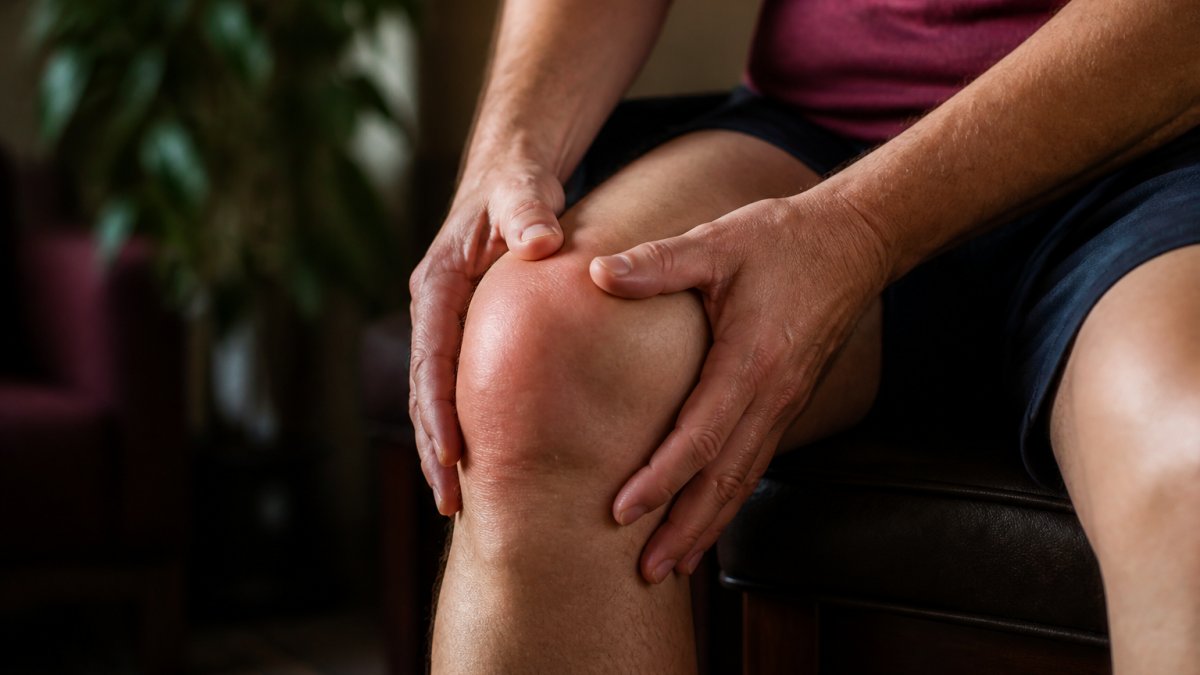
Early-stage osteoarthritis often produces stiffness after periods of inactivity, you might notice your knee feels tight when you first get out of bed or after sitting for extended periods. Pain develops gradually and typically worsens with activity. Swelling may appear, especially after exercise or at the end of the day.
As osteoarthritis progresses, cartilage loss accelerates. The joint space narrows, and bone spurs (osteophytes) may develop along the joint margins. This progression can span years or decades. Mid-stage osteoarthritis causes more persistent pain, reduced range of motion, and occasional giving way or buckling sensations. You might notice creaking or grinding sounds (crepitus) when moving the knee.
Advanced osteoarthritis significantly limits function. Learn about regenerative therapy options and costs for knee arthritis to understand treatment choices specific to your condition. Pain becomes present even at rest, and the knee may feel unstable during normal activities. Many people develop a limp to reduce pressure on the affected side, which creates compensation patterns in the hip and lower back. The condition doesn't reverse, but its progression can be slowed through appropriate management.
Degenerative Conditions and Age-Related Changes
Beyond osteoarthritis, several other degenerative processes affect the knee as we age. Cartilage quality naturally declines, and the structures supporting the joint become less resilient. Understanding these age-related changes helps explain why common causes of knee pain in 2026 increasingly affect people over 50.
Cartilage degeneration happens at the cellular level. The matrix that gives cartilage its shock-absorbing properties breaks down, and the tissue becomes thinner and more prone to cracking. This process can accelerate due to previous injuries, repetitive stress, or genetic factors. Once cartilage is damaged, the body cannot fully repair it, which is why early intervention matters.
Bone density changes affect knee function as well. Osteoporosis, weakening of bone tissue, becomes more common with age, particularly in women after menopause (the CDC). Weaker bones provide less stable support for the joint, and fractures become more likely from minor falls. Some people develop stress fractures in the tibia or femur from cumulative impact.
Ligament and tendon elasticity decreases over time. The collagen that comprises these structures becomes stiffer and less flexible. This explains why older adults often experience increased stiffness and reduced range of motion. The rotator cuff of the knee, the dynamic stabilizers, may not function as effectively, leading to instability sensations.
Synovial fluid, which lubricates the joint, becomes less effective with age. The fluid may become thinner or produce in smaller quantities, reducing the knee's shock-absorbing capacity. This contributes to increased friction and accelerated cartilage wear.
Biomechanical Factors Contributing to Knee Pain
How your body moves profoundly affects knee health. Biomechanical dysfunction, misalignment, muscle imbalances, or movement pattern errors, creates abnormal stress on the joint. These factors often develop gradually and can persist for years before causing noticeable pain.
Knee alignment issues begin upstream. Hip weakness or tightness forces the knee to compensate during movement. If your hip abductors (the muscles on the outside of your hip) are weak, your knee caves inward when you walk or run. This valgus stress concentrates force on the inner knee structures, accelerating cartilage wear. Similarly, tight hip flexors or weak glutes create movement patterns that stress the patellofemoral joint (where the kneecap meets the femur).
Ankle mobility limitations also matter. Stiff ankles limit dorsiflexion (pointing your toes upward), forcing your knee to bend more to achieve the same movement. This excessive knee bending creates repetitive microtrauma. Over time, this compensation pattern contributes to pain.
Foot mechanics influence knee alignment. Flat feet or high arches create different stress patterns. Overpronation (rolling inward) can trigger knee pain in some people, while underpronation (rolling outward) affects others.
Muscle imbalances create dysfunction. Tight quadriceps muscles can pull the kneecap out of its ideal tracking path. Weak hamstrings fail to properly decelerate the knee during running or jumping. Imbalances between the inner and outer quadriceps muscles alter patellar tracking. These imbalances often develop from specific sports or activities that strengthen certain muscles while neglecting others.
Posture and core stability affect the entire kinetic chain. Poor posture creates forward head position and rounded shoulders, which shifts your center of gravity. This compensation cascades down through the hips and knees. Weak core muscles fail to stabilize your pelvis, forcing your legs to work harder during movement.
Knee Pain Relief at Home: What Actually Works
These approaches work best for mild to moderate pain and are most effective when started early.
Rest and activity modification form the foundation. Explore knee pain support services in Lady Lake to develop a personalized relief strategy. This doesn't mean complete immobilization, movement is essential for joint health. Instead, modify activities that aggravate your knee. If stairs cause pain, take them slowly or use a railing. If walking on hard surfaces bothers your knee, try softer terrain like grass or tracks. Reduce high-impact activities temporarily while maintaining low-impact movement like swimming or cycling.
Ice reduces inflammation and pain. Apply ice for 15-20 minutes several times daily, particularly after activity. Ice works best in the acute phase (first 48 hours after injury) but can help with chronic pain too. Wrap ice in a towel, never apply directly to skin, and avoid prolonged icing that might damage tissue.
Compression with an elastic bandage or sleeve reduces swelling and provides gentle support. Compression works best when applied snugly but not so tight that it restricts circulation. Many people find that wearing a knee sleeve during activity prevents pain from developing.
Elevation above heart level reduces swelling, particularly after activity. Lying down with your knee supported on pillows for 15-20 minutes helps fluid drain from the joint. This simple strategy often provides noticeable relief.
Strengthening exercises address underlying weakness. Quadriceps sets (tightening your thigh muscle while your leg is straight) can be done anywhere. Straight leg raises build strength without bending the knee. Clamshells and side-lying leg lifts target hip muscles. Wall sits and step-ups progressively build strength. Start gently and progress gradually, pushing too hard too fast worsens pain.
Flexibility work reduces stiffness. Gentle stretching of the quadriceps, hamstrings, calves, and hip flexors improves range of motion. Hold stretches for 30 seconds without bouncing, and perform them after warming up muscles with light activity.
You can learn more about staying active despite knee issues by reviewing Stay Active With Knee Arthritis: A Step-by-Step Guide.
When to See a Doctor for Knee Pain
Home strategies help many people, but certain situations warrant professional evaluation. Knowing when to seek care prevents minor issues from becoming chronic problems.
Seek immediate medical attention if you experience severe swelling that develops within hours, inability to bear weight on the leg, signs of infection (fever, warmth, redness), or severe pain that doesn't improve with rest and ice. These indicate potentially serious injury or infection requiring urgent evaluation.
Schedule an appointment with a healthcare provider if pain persists beyond two weeks despite home care, swelling doesn't improve after several days, you experience recurring episodes of your knee giving way, you hear popping or locking sensations, or pain significantly limits your daily activities. Professional evaluation identifies the specific cause and prevents compensatory patterns that create secondary problems.
A $49 New Patient Visit allows you to discuss your symptoms.
You can explore Alternatives to Joint Replacement Surgery if you're concerned about your knee's long-term trajectory.
What to Expect at Your First Visit: Diagnosis and Treatment Options
We also offer a $49 Focused Shockwave Pain Mapping visit to assess whether shockwave therapy might benefit your specific knee condition.
Do We Accept Walk-Ins?
We welcome both scheduled appointments and walk-in patients at Alpha Total Health in Lady Lake. Walk-in availability depends on current patient load, so calling ahead ensures prompt service. Our team accommodates urgent situations whenever possible and can often fit in same-day evaluations for acute injuries.
Do We Treat Sciatica and Neuropathy?
At Alpha Total Health, we offer founder-led chiropractic care and advanced regenerative therapies, drawing on over 29 years of clinical experience. Schedule your New Patient Consultation.
Frequently Asked Questions
What are the most common causes of knee pain?
The most common causes of knee pain include osteoarthritis, ligament injuries (ACL or MCL sprains), meniscus tears, patellar tendinitis, and biomechanical issues like misalignment or muscle imbalances.
How can I tell whether my knee pain is from arthritis or an injury?
Arthritis pain typically develops gradually, feels stiff in the morning, and worsens with activity or weather changes. Injury-related pain usually starts suddenly after a specific event, a twist, fall, or impact, and may include swelling, instability, or a popping sensation. However, distinguishing between them requires professional assessment. A qualified practitioner can perform physical tests and imaging to determine the actual cause and recommend appropriate treatment.
When should I see a doctor for knee pain?
Seek professional care if your knee pain persists beyond a few days, limits your daily activities, is accompanied by significant swelling or instability, or follows an injury. Pain that wakes you at night, severe swelling, redness, warmth, or inability to bear weight also warrant immediate attention. Early evaluation can prevent minor issues from becoming chronic problems and help you return to activities like golf or pickleball faster.
What can I do at home to relieve knee pain?
Effective home strategies include rest and activity modification, ice application for acute swelling, compression with a supportive sleeve, elevation to reduce fluid buildup, and over-the-counter anti-inflammatory medication as directed. Gentle stretching and low-impact strengthening exercises often help, but avoid activities that increase pain. Maintaining a healthy weight reduces stress on the knee joint. However, home care alone may not address underlying causes, professional guidance ensures you're doing the right exercises for your specific condition.