
 how-to
Stay Active With Knee Arthritis: A Step-by-Step Guide
Table of Contents
- Understanding Knee Arthritis and Activity
- Low Impact Exercises for Knee Pain
- How to Reduce Inflammation in the Body
- Modifying Your Favorite Activities
- Chiropractic Care for Joint Mobility
- Managing Pain During Activity
- Common Mistakes to Avoid
- When to Seek Professional Help
- Frequently Asked Questions
Last Updated: October 7, 2026
Understanding Knee Arthritis and Activity
Knee arthritis makes staying active feel impossible. The stiffness, swelling, and pain can convince you that rest is the only answer. But to stay active knee arthritis requires the opposite approach.
Movement is medicine for arthritic knees. When you stay active, you reduce inflammation, strengthen the muscles that support your joints, and maintain your range of motion. The key is choosing the right activities and modifying them to protect your knees.
At Alpha Total Health in Lady Lake, we work with active people every day who want to keep doing what they love without pain. Whether you're a golfer, pickleball player, or someone who simply wants to walk without discomfort, how to stay active with knee arthritis is entirely within your control.
Knee arthritis comes in different forms. Osteoarthritis develops when the cartilage that cushions your knee wears down over time. Rheumatoid arthritis is an autoimmune condition that attacks the joint lining. Both cause pain and stiffness, but both respond well to movement combined with proper care.
The goal isn't to return to what you did before. The goal is to build a sustainable routine that keeps you mobile, strong, and pain-free.
Low Impact Exercises for Knee Pain
Low impact exercises protect your knees while building strength. These activities move your joints without the pounding stress of running or jumping.
Walking and Water-Based Movement
Walking is the simplest way to stay active with knee arthritis. Start with short distances on flat, even surfaces. Walk on pavement or indoor tracks rather than uneven terrain. Gradually increase your distance as your knees feel stronger.
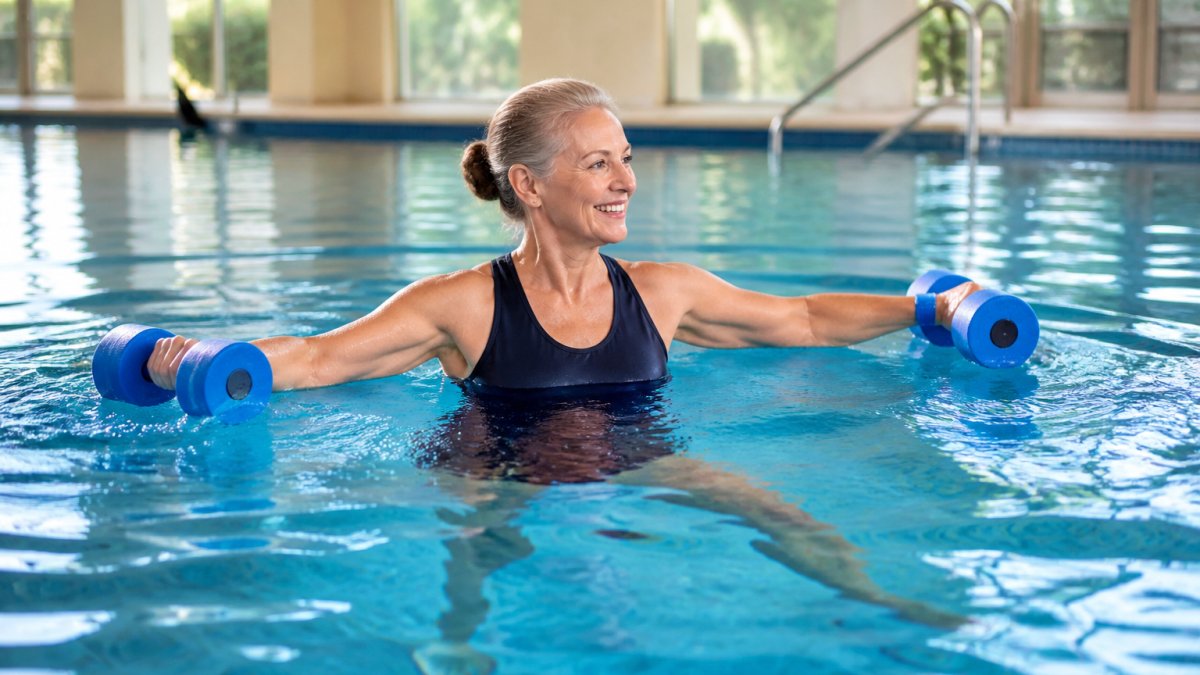
Water-based exercise is even better for arthritic knees. The water supports your body weight, reducing stress on your joints. Swimming, water walking, and aquatic aerobics all work well.
Start with these water activities:
- Water walking in the shallow end for 10-15 minutes
- Gentle swimming using a kickboard for support
- Water aerobics classes designed for joint health
- Floating exercises that move your legs freely
The buoyancy of water reduces the load on your knees by up to 50 percent. This means you can exercise longer and harder without pain.
Strength and Flexibility Work
Strong muscles protect weak joints. When the muscles around your knee are strong, they absorb shock and reduce stress on the cartilage.
Focus on these muscle groups:
- Quadriceps (front of thigh)
- Hamstrings (back of thigh)
- Glutes (buttocks)
- Calf muscles
Perform these exercises 3-4 times per week:
Straight Leg Raises: Lie on your back. Keep one leg straight and lift it slowly. Hold for 2 seconds. Lower without touching the floor. Do 10-15 reps per leg.
Calf Raises: Stand holding a chair for balance. Rise up on your toes. Hold for 1 second. Lower slowly. Do 15-20 reps.
Glute Bridges: Lie on your back with knees bent. Push through your heels to lift your hips. Squeeze your glutes at the top. Lower slowly. Do 12-15 reps.
Wall Sits: Stand with your back against a wall. Slide down until your knees are bent at 90 degrees. Hold for 20-30 seconds. Rest and repeat 5 times.
Flexibility prevents stiffness and improves range of motion. Stretch gently after warming up your muscles.
Hold each stretch for 20-30 seconds. Never bounce or force a stretch.
Hamstring Stretch: Lie on your back. Pull one knee toward your chest. Keep your other leg straight. Feel the stretch behind your thigh.
Quad Stretch: Stand and pull one foot toward your buttock. Keep your knees aligned. Feel the stretch on the front of your thigh.
Hip Flexor Stretch: Lunge forward with one leg. Keep your back knee on the ground. Feel the stretch in the front of your hip.
How to Reduce Inflammation in the Body
Inflammation drives knee arthritis pain. Your immune system responds to joint damage by sending inflammatory chemicals to the area. This causes swelling, stiffness, and discomfort.
How to reduce inflammation in the body starts with what you eat. Certain foods increase inflammation while others reduce it.
Foods that reduce inflammation:
- Fatty fish like salmon, mackerel, and sardines (omega-3s)
- Berries, especially blueberries and strawberries
- Leafy greens like spinach and kale
- Olive oil
- Nuts and seeds
- Turmeric and ginger
Foods that increase inflammation:
- Processed foods and refined sugars
- Fried foods
- Excessive red meat
- Sugary drinks
- Trans fats
Sleep is equally important for reducing inflammation. When you sleep, your body repairs damaged tissue and reduces inflammatory markers. Aim for 7-9 hours per night.
Movement itself reduces inflammation. Exercise triggers your body to release anti-inflammatory compounds. This is why staying active is so important even when your knee hurts.
Modifying Your Favorite Activities
You don't have to give up the activities you love. You just need to modify them.
Adjusting Your Golf Game
Golfers in Lady Lake and The Villages often worry that knee arthritis means the end of their game. It doesn't. Small changes to your swing and routine can keep you on the course.
Modify your stance and swing:
- Widen your stance for better stability
- Reduce your backswing rotation to minimize knee stress
- Use a golf cart instead of walking the course
- Take practice swings slowly before each shot
- Avoid twisting your torso excessively
Strengthen your core. A strong core reduces the stress your knees absorb during your swing. Do planks, bird dogs, and rotational exercises.
Wear supportive shoes. Golf shoes with good arch support and cushioning reduce knee pain. Avoid walking on wet grass or uneven terrain when possible.
Playing Pickleball Pain-Free
Pickleball is easier on your knees than tennis because it requires less running and explosive movement. But you still need to modify your play.
Tips for pain-free pickleball:
- Stay near the net to reduce running distance
- Use small, controlled movements instead of big swings
- Wear knee-friendly footwear with good lateral support
- Take breaks between games to rest your knees
- Play on hard courts rather than clay when possible
- Avoid lunging, move to the ball instead
Warm up before playing. Five to ten minutes of light activity prepares your knees for play and reduces injury risk.
Chiropractic Care for Joint Mobility
Chiropractic care improves joint mobility and reduces pain. When your joints move properly, inflammation decreases and function improves.
At Alpha Total Health, we've spent over 29 years helping people in Lady Lake maintain active lifestyles despite joint issues. Our founder-led approach combines chiropractic adjustments with advanced regenerative therapies designed specifically for your needs.
Chiropractic adjustments restore proper alignment to your knee joint. When your knee tracks correctly, stress distributes evenly across the cartilage. This reduces wear and pain.
Beyond adjustments, regenerative therapies support healing at the cellular level. These treatments work alongside your exercise routine to accelerate recovery and reduce inflammation.
The combination of movement, proper nutrition, and professional care creates lasting results. This is why many people find that staying active with knee arthritis becomes easier over time, not harder.
Managing Pain During Activity
Pain during activity is a signal to adjust, not to stop. Learning to manage pain while exercising is essential for long-term success.
Use the two-hour pain rule. If pain increases more than two hours after exercise and lasts beyond that, you did too much. Reduce intensity next time.
Apply ice after activity. Ice reduces inflammation and numbs pain. Use ice for 15-20 minutes after exercise.
Wear a knee brace or compression sleeve during activity. These provide support and reduce stress on the joint. Many people find they can exercise longer and with less pain when wearing support.
Take anti-inflammatory supplements as directed by your healthcare provider. Common options include turmeric, ginger, and omega-3 fish oil. Always check with your doctor before starting supplements.
Common Mistakes to Avoid
Resting too much is the biggest mistake. People assume that rest helps arthritis, but immobility makes it worse. Stiffness increases, muscles weaken, and pain worsens.
Pushing too hard too fast is the second mistake. Starting with intense exercise causes pain and swelling that discourages continued activity. Build gradually.
Ignoring pain signals is dangerous. Sharp pain, significant swelling, or pain that lasts hours after exercise means you need to adjust your approach or seek professional help.
Skipping warm-ups and cool-downs leaves your knees vulnerable. Five to ten minutes of light movement before exercise prepares your joints. Stretching after exercise maintains flexibility.
Choosing the wrong shoes creates unnecessary stress. Worn-out shoes, high heels, and unsupportive footwear all increase knee pain. Invest in quality athletic shoes with good cushioning and arch support.
Avoiding professional help when you need it slows your progress. Many people try to manage knee arthritis alone for months or years before seeking care. Professional guidance accelerates improvement and prevents complications.
When to Seek Professional Help
Some situations require professional evaluation. Know when to reach out to a healthcare provider.
Seek help if:
- Pain increases despite rest and ice
- Swelling doesn't improve within a few days
- Your knee gives out or feels unstable
- You hear clicking or popping sounds
- Redness or warmth develops around the joint
- Pain prevents you from normal daily activities
At Alpha Total Health in Lady Lake, our New Patient Consultation Package introduces you to our approach. We evaluate your specific situation and create a plan tailored to your goals.
Whether you need chiropractic care, regenerative therapy, or both, professional guidance ensures you're on the right track. Many people wish they'd sought help sooner because the results come faster with expert support.
Your goal is to stay active knee arthritis doesn't prevent you from doing what you love. Knee arthritis doesn't have to stop you.
Staying active with knee arthritis requires a clear plan and professional support.
| Activity | Best For Knee Arthritis | Frequency | Duration |
|---|---|---|---|
| Walking | Mild to moderate arthritis | 5-7 days/week | 20-30 minutes |
| Water aerobics | Moderate to severe arthritis | 3-4 days/week | 30-45 minutes |
| Swimming | All severity levels | 3-4 days/week | 20-30 minutes |
| Strength training | All severity levels | 3-4 days/week | 20-30 minutes |
| Yoga (modified) | Mild to moderate arthritis | 2-3 days/week | 30-45 minutes |
| Pickleball | Mild arthritis | 2-3 days/week | 60 minutes |
According to the Arthritis Foundation's exercise guidelines, regular physical activity reduces pain and improves function in people with osteoarthritis.
Research from Johns Hopkins Medicine on knee arthritis management shows that strengthening the muscles around your knee can reduce pain by up to 30 percent.
The American Academy of Orthopaedic Surgeons' recommendations for arthritis care emphasize that staying active is one of the most effective ways to manage knee arthritis long-term.
Frequently Asked Questions
What exercises are safe for knee arthritis?
Low-impact activities like swimming, water walking, stationary cycling, and gentle stretching are safe for knee arthritis. These reduce stress on your joint while maintaining strength and flexibility. Walking on flat surfaces, tai chi, and seated exercises also work well. The key is starting slowly and stopping if you feel sharp pain. Always consult a professional before starting a new exercise routine, especially if your arthritis is severe.
How can I reduce inflammation in the body when I have knee arthritis?
Several strategies help reduce inflammation: maintain consistent low-impact activity to improve circulation, apply ice after exercise (15-20 minutes), elevate your knee when resting, and consider compression sleeves. Professional treatments like chiropractic care can improve joint mobility and reduce inflammatory stress. Staying hydrated and avoiding prolonged immobility also helps. A professional can recommend specific anti-inflammatory approaches tailored to your condition.
Can staying active make knee arthritis worse?
Staying active with the right approach actually helps knee arthritis by maintaining joint function and reducing stiffness. However, high-impact activities (running, jumping) or pushing through sharp pain can worsen symptoms. The difference is choosing appropriate exercises, using proper form, and listening to your body. Gradual progression and professional guidance ensure you stay active safely without aggravating your condition.
When should I see a chiropractor for knee pain from arthritis?
Consider seeing a chiropractor if knee pain limits your daily activities, reduces your mobility, or doesn't improve with rest and self-care. A chiropractor can assess your joint mobility, identify movement patterns contributing to pain, and develop a personalized plan. Early intervention often prevents compensation patterns that create additional problems. A consultation helps determine whether chiropractic care is right for your specific situation.