
 ultimate-guide
Chiropractic Care for Seniors: Benefits & What to Expect
Table of Contents
- Why Chiropractic Care Matters for Seniors
- Common Conditions Treated with Gentle Chiropractic Techniques for Seniors
- What Happens During Your First Chiropractic Visit
- Improving Mobility in Seniors Through Chiropractic Care
- Medicare Chiropractic Coverage in Florida: What You Need to Know
- How to Choose the Right Chiropractor for Your Needs
- Addressing Common Concerns About Chiropractic Care for Seniors
- Frequently Asked Questions
Last Updated: September 23, 2026
Why Chiropractic Care Matters for Seniors
Chiropractic care seniors need addresses a fundamental challenge that many face as they age: maintaining mobility and managing chronic pain without relying on medications or invasive procedures. As the body changes over decades, wear and tear accumulates in the spine, joints, and soft tissues, often leading to discomfort that limits daily activities and reduces quality of life.
Many seniors discover that gentle chiropractic care offers real relief where other approaches have fallen short. The spine naturally loses flexibility and cushioning over time, and vertebrae can shift out of alignment, compressing nerves and creating pain patterns that radiate through the back, neck, and limbs. At Alpha Total Health in Lady Lake, addressing these structural issues directly, rather than masking symptoms with medication, can help restore the ability to golf, garden, travel, and enjoy time with family.
The key difference is approach. Chiropractic care for seniors isn't about aggressive manipulation. It's about precise, gentle adjustments tailored to an aging body's specific needs. This targeted strategy helps restore proper alignment, reduce nerve irritation, and improve the body's natural healing response.
Common Conditions Treated with Gentle Chiropractic Techniques for Seniors
Seniors in Lady Lake and the broader Central Florida region commonly experience several conditions that respond well to chiropractic care. Understanding these helps clarify whether this approach might address your specific situation.
Osteoarthritis and degenerative disc disease top the list. These conditions involve the gradual breakdown of cartilage and disc material in the spine and joints (Osteoarthritis and intervertebral disc degeneration: Quite different, quite similar). Rather than stopping the process, chiropractic care reduces inflammation, improves joint mobility, and alleviates the pain that often accompanies movement. Gentle adjustments help restore proper joint mechanics, which can slow further deterioration.
Chronic lower back pain affects many retirees, particularly those with decades of work-related strain or repetitive activities. Misaligned vertebrae pinch nerves and create muscle tension that builds over time. Precise adjustments can help realign the spine and reduce pressure on nerves, potentially providing relief.
Cervical spine issues and neck pain frequently develop from years of poor posture, computer work, or minor injuries that were never fully resolved. Gentle adjustments to the neck can help restore proper curvature and reduce muscle tension, which may improve the ability to turn the head and look upward without discomfort.
Shoulder and hip pain often stem from postural imbalances or joint misalignment rather than a single injury. Chiropractic care addresses the underlying structural cause, not just the symptom, which can lead to more lasting relief.
Many seniors also benefit from care for soft tissue injuries and muscle tension, which accumulate over a lifetime. Gentle techniques complement adjustments to release chronic tightness and restore normal function.
What Happens During Your First Chiropractic Visit
Your first visit to a chiropractic office sets the foundation for your care plan. Expect a thorough conversation about your health history, current symptoms, and what activities matter most to you, whether that's golf, gardening, or simply walking without pain.
The chiropractor will perform a physical examination, assessing your posture, spinal alignment, and range of motion. They may ask you to perform specific movements to identify which motions trigger discomfort or restriction. This hands-on evaluation reveals exactly where misalignment or dysfunction exists.
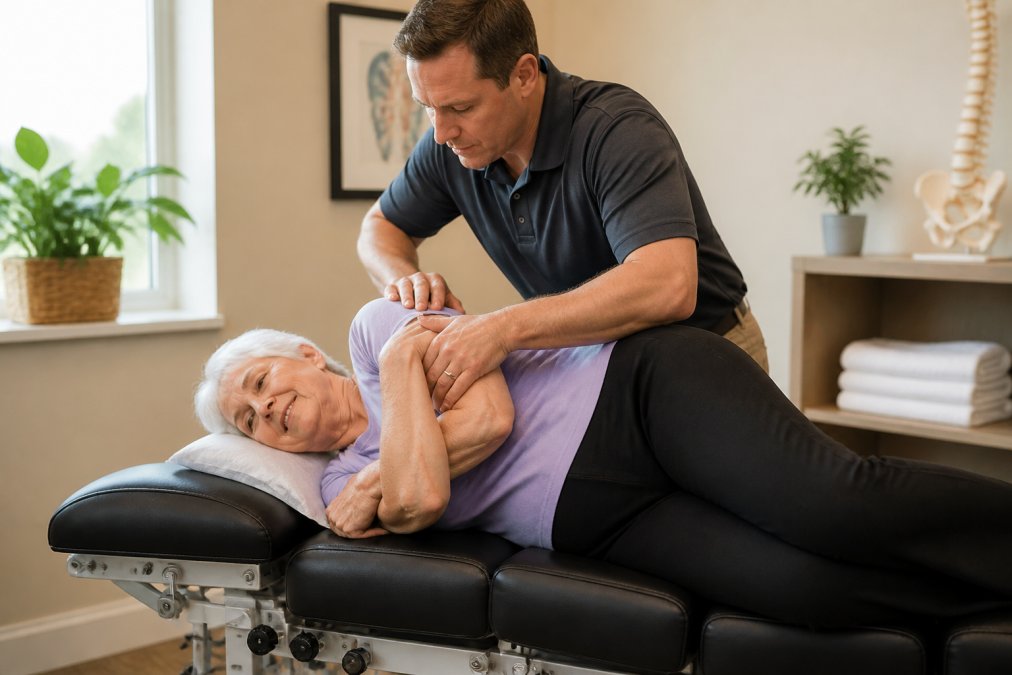
Depending on what the examination reveals, imaging may be recommended. However, we do not take x-rays here but will refer out for imaging when necessary. This referral ensures you have the diagnostic information needed to guide your treatment safely and effectively.
Once the chiropractor understands your condition, they'll explain their findings in clear language, not medical jargon. They'll describe what's happening in your spine or joints, why it's causing your symptoms, and how chiropractic care addresses the root cause. You'll learn what to expect during treatment, how many visits might be needed, and what you can do at home to support your recovery.
Many seniors appreciate this clarity. You're not left guessing whether treatment is working or how long relief will last. Instead, you have a concrete plan with realistic expectations.
Improving Mobility in Seniors Through Chiropractic Care
Mobility is independence. When your spine functions properly, your body moves freely, and daily life feels effortless. When vertebrae are misaligned or joints are restricted, even simple tasks, reaching for a cup, looking over your shoulder, bending to pick something up, become sources of pain or caution.
Chiropractic adjustments restore proper joint mechanics, which immediately improves your range of motion. As alignment improves and nerve irritation decreases, muscles relax and stop guarding against pain. The result is movement that feels natural again.
Many seniors in Lady Lake find that consistent chiropractic care can help them regain activities they enjoy. Golfers may experience less restriction. Gardeners might bend and dig with less discomfort. Physical intimacy can become more comfortable. These improvements can contribute to an active, engaged life.
The process works best with consistency. A single adjustment provides temporary relief; a series of adjustments over weeks allows the body to hold proper alignment and build strength around the corrected position. As alignment stabilizes, visits typically space out, and many seniors maintain their mobility with periodic maintenance care.
Gentle exercises and stretches recommended by your chiropractor accelerate this progress. These aren't demanding routines, they're simple movements designed to reinforce proper alignment and prevent regression between visits.
Medicare Chiropractic Coverage in Florida: What You Need to Know
Medicare coverage for chiropractic care has specific rules that many seniors don't fully understand. Original Medicare (Part B) covers chiropractic adjustments, but only for the treatment of acute or chronic subluxation, a misalignment of vertebrae confirmed by x-ray. The coverage is limited, and you must meet the Part B deductible first.
This means Medicare typically covers adjustments to the lumbar spine (lower back) when there's documented misalignment. Coverage for cervical (neck) or thoracic (mid-back) adjustments is more limited, and coverage for general wellness or maintenance care is not included.
For seniors in Florida, understanding your specific plan matters. Medicare Advantage plans (Part C) sometimes offer more generous chiropractic benefits than Original Medicare, though coverage varies by plan. Some plans include additional visits or cover conditions beyond subluxation. It's worth reviewing your plan documents or calling your insurer to confirm what's covered.
At Alpha Total Health in Lady Lake, our team can verify your coverage before your visit, so there are no surprises. Many seniors find that even with Medicare's limits, the covered visits provide substantial relief, and the investment in additional care beyond coverage often pays for itself through reduced pain medication and improved quality of life.
How to Choose the Right Chiropractor for Your Needs
Choosing a chiropractor is a personal decision, and the right fit depends on your specific situation and preferences. Several factors deserve attention.
Experience with seniors matters significantly. A chiropractor experienced in treating older adults understands how aging changes bone density, flexibility, and healing capacity. They adjust their techniques accordingly and recognize conditions that require referral to another specialist. Ask how many senior patients they see and what conditions they commonly treat.
Founder-led practices often bring a different quality to care. When the person who started the practice is still actively involved, they typically maintain higher standards and take personal responsibility for patient outcomes. At Alpha Total Health, our founder-led approach means the person overseeing your care has nearly 30 years of clinical experience and a direct stake in your results.
Communication style is crucial. You want a chiropractor who explains findings clearly, listens to your concerns, and adjusts the plan if something isn't working. Avoid practitioners who pressure you into long-term contracts or make guarantees that sound too good to be true.
Regenerative therapy options expand what's possible for chronic conditions. If your primary issue is degenerative, osteoarthritis, worn discs, chronic inflammation, a practice offering advanced regenerative therapies can address deeper tissue damage that adjustments alone might not fully resolve. This combination approach often delivers better long-term results.
Location and convenience shouldn't be underestimated.
Addressing Common Concerns About Chiropractic Care for Seniors
Several myths and concerns circulate about chiropractic care, particularly among older adults. Addressing these directly helps clarify what's real and what's misunderstanding.
Frequently Asked Questions
Is chiropractic care safe for seniors with osteoporosis?
Chiropractic care can be safe for seniors with osteoporosis when performed by a qualified professional using appropriate techniques. A chiropractor will assess your bone density and medical history before treatment. Gentle adjustments and soft tissue therapies are often suitable alternatives to high-force techniques. Always disclose your osteoporosis diagnosis during your consultation so your chiropractor can customize your care plan accordingly.
Does Medicare cover chiropractic services in Florida?
Medicare Part B covers chiropractic services in Florida, but only for manual spinal manipulation to treat subluxation of the spine. Coverage is limited, and you must meet your annual Part B deductible first. Not all chiropractic treatments are covered, services like X-rays, massage, or physical therapy may require separate authorization. Contact your Medicare plan or a local chiropractor's office to verify your specific coverage details.
How often should seniors visit a chiropractor?
Frequency depends on your condition, age, and treatment goals. Your chiropractor will recommend a personalized schedule during your consultation based on your health needs and response to treatment.
Can chiropractic care help me return to activities like golf and pickleball?
Yes, many seniors return to sports and recreational activities after chiropractic care. Treatment addresses the joint stiffness, pain, and mobility restrictions that limit performance. Your chiropractor can recommend specific adjustments and therapies tailored to your sport, for example, addressing hip and lower back issues common in golfers. Results vary by individual; discuss your specific activity goals during your consultation.