
 how-to
Chiropractic Care for Chronic Arthritis: A 2026 Guide
Table of Contents
- Understanding How Chiropractic Care Helps Chronic Arthritis
- Chiropractic Adjustments for Osteoarthritis: What to Expect
- Natural Arthritis Pain Management Beyond the Adjustment
- Chiropractic Care vs Physical Therapy for Arthritis
- Home-Based Maintenance Exercises for Joint Mobility
- Safety, Risks, and Patient-Specific Contraindications
- Conclusion: Taking the Next Step Toward Relief
- Frequently Asked Questions
Last Updated: September 17, 2026
Understanding How Chiropractic Care Helps Chronic Arthritis
Chiropractic care for chronic arthritis is a hands-on, non-surgical approach that focuses on restoring joint alignment, reducing inflammation, and improving how your whole musculoskeletal system moves. At Alpha Total Health, we've spent over 29 years helping people stay active without relying on daily pain pills. If your knees ache on the golf course or your hands stiffen up before you've even had coffee, this guide is for you.
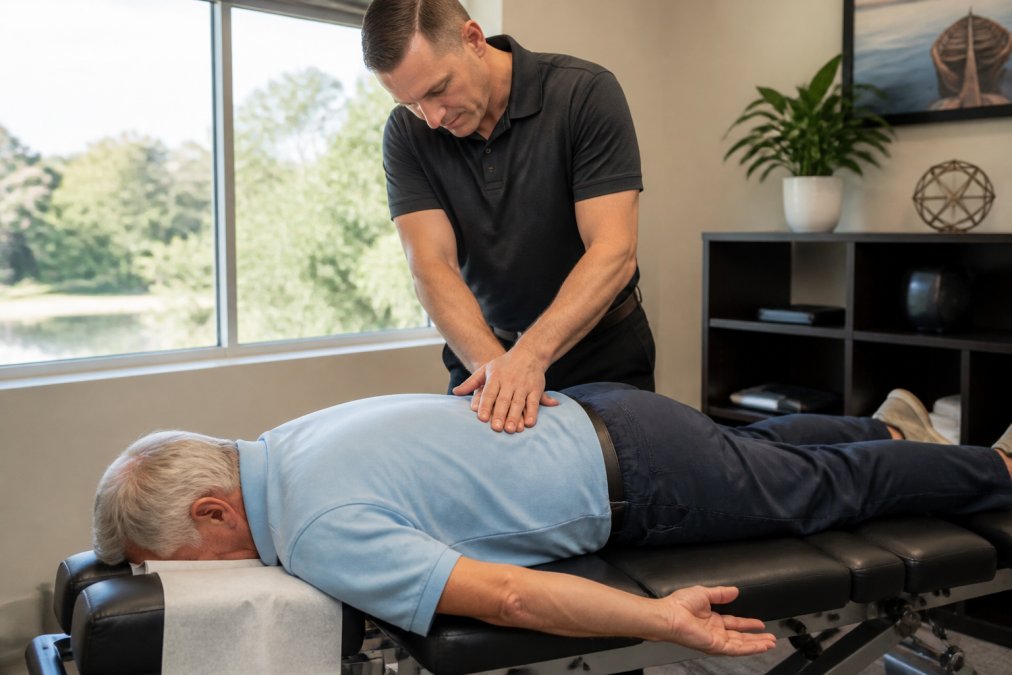
Here's the core idea: arthritis pain isn't just about worn cartilage. It's also about how the joints around that cartilage are moving, or not moving. When one joint gets stiff, the ones nearby work harder to pick up the slack. That chain reaction is why a sore hip can eventually turn into a sore back.
The Difference Between Osteoarthritis and Rheumatoid Arthritis
These two conditions share a name but behave very differently.
Osteoarthritis is the wear-and-tear type. Cartilage degrades over time, and joints get stiff, swollen, and sore, especially after activity. It's the most common form in older adults.
Rheumatoid arthritis is an autoimmune condition. The body's own immune system attacks the joint lining, causing inflammation that can affect both sides of the body at once.
Why does the distinction matter for treatment? Because rheumatoid arthritis is a systemic, chronic condition that needs medical management, often from a rheumatologist.
The Role of Spinal Manipulation in Joint Health
Spinal manipulation is a controlled, precise movement applied to a joint to restore alignment and range of motion. When a joint is stuck, the nerves and muscles around it don't fire properly. A therapeutic adjustment helps reset that pattern.
Chiropractic Adjustments for Osteoarthritis: What to Expect
If you've been living with aching, stiff joints, the idea of someone manipulating your spine can sound intimidating. Here's the truth: a first visit for arthritis care is calmer than most people expect. There's no twisting you into a pretzel on day one, and nothing happens before you understand why.
Here's the typical flow:
- Consultation. We talk about your history, where it hurts, when it hurts, and what you want to get back to, gardening, golf, grandkids, sleeping through the night.
- Examination. A physical exam checking joint mobility, posture, gait, and body mechanics, plus a hands-on assessment of which joints are restricted and which are compensating.
- Imaging review. We look at any X-rays, MRIs, or bloodwork you've already had. If you haven't had imaging and it's warranted, we'll tell you.
- First treatment. A gentle adjustment, if it's appropriate for you that day. For osteoarthritis, this often means low-force techniques and mobilization rather than high-velocity thrusts, especially on the hips, knees, and spine.
- Report of findings. A clear explanation of what we found, what we think is driving your pain, and what a realistic plan looks like.
How Osteoarthritis and Rheumatoid Arthritis Are Handled Differently
This matters more than most articles admit. Osteoarthritis is a mechanical, wear-and-tear process. The joint surfaces are degrading, and the surrounding muscles and joints are working overtime to compensate. Chiropractic care can restore motion in the restricted segments, reduce the load on the arthritic joint, and buy you more comfortable range.
What an Adjustment Actually Feels Like
Most people describe it as a quick, controlled pressure followed by a release, sometimes with a pop, sometimes without. The pop isn't the point. The point is restoring normal joint function so your body can move the way it's designed to. Some people feel immediate relief; others feel looser the next day. Both are normal.
What We Look For Before We Adjust
Not every stiff joint should be adjusted on day one. Before any treatment, we screen for red flags: significant nerve compression, recent trauma, unstable joints, or signs the pain isn't coming from the joint at all. If something doesn't add up, we say so and refer you to the right provider. That's not a sales pitch, it's how good care works.
Natural Arthritis Pain Management Beyond the Adjustment
An adjustment alone won't hold if your daily habits keep undoing it. Natural arthritis pain management works best when it's a package, not a single trick.
A few things that genuinely help:
- Stay moving. Gentle daily motion keeps synovial fluid circulating, which lubricates joints.
- Watch your weight. Extra pounds add load to hips, knees, and ankles.
- Use heat before activity, ice after. Heat loosens stiff joints; ice calms swelling.
- Sleep on a supportive mattress. Poor sleep posture feeds morning stiffness.
- Manage stress. Stress increases inflammation throughout the body.
Chiropractic Care vs Physical Therapy for Arthritis
This isn't a rivalry. It's a partnership, and the right mix depends on your goals.
Approach | Best For | Typical Focus | Works Well With |
|---|---|---|---|
Chiropractic care | Joint alignment, pain relief, mobility | Spinal manipulation, therapeutic adjustments | Physical therapy, home exercise |
Physical therapy | Strength, stability, rehab after injury | Exercise programs, muscle retraining | Chiropractic care, pain management |
Combined approach | Chronic arthritis with stiffness and weakness | Alignment plus strengthening | Both, plus medical care |
Home-Based Maintenance Exercises for Joint Mobility
What you do between visits decides how well you hold your progress. These are simple, low-impact moves you can do at home.
- Gentle range-of-motion circles for shoulders and hips, 10 reps each direction
- Seated knee extensions to keep the joint tracking smoothly
- Wall slides for shoulder mobility without strain
- Ankle pumps to support circulation and reduce stiffness
- Slow neck turns to ease upper-body tension
Safety, Risks, and Patient-Specific Contraindications
Chiropractic care is generally well tolerated, but it isn't right for everyone, and honest care means telling you when it's not. Most articles gloss over this. We won't, because knowing when to say no is what makes the rest of the care trustworthy.
When Chiropractic Care Is the Wrong Choice
These are situations where an adjustment could cause harm rather than relief:
- Severe osteoporosis or fragile bones. Long-term steroid use, certain medications, and some autoimmune conditions weaken bone. A high-velocity thrust on a fragile vertebra can cause a fracture. Low-force techniques may still be an option, but only after imaging and a frank conversation.
- Spinal fractures or recent trauma. If a bone is already broken or unstable, manipulation can worsen it. This needs medical evaluation first.
- Active infection or uncontrolled inflammation. Adjusting an infected or acutely inflamed joint can spread the problem and increase pain. Wait until the acute phase resolves.
- Certain cancers affecting the spine. Metastatic disease can weaken bone structure. Manipulation in these areas is contraindicated.
- Significant nerve compression with worsening symptoms. Numbness, weakness, or loss of bowel/bladder control are red flags that need urgent medical evaluation, not an adjustment.
- Cervical instability, which is more common in rheumatoid arthritis. RA can weaken the ligaments that stabilize the upper neck. Aggressive cervical manipulation in this population carries real risk. Gentle mobilization or referral is the safer path.
Why Rheumatoid Arthritis Patients Need Extra Screening
RA isn't just a joint-lining disease, it can affect the ligaments, tendons, and bones around the joints, including the upper cervical spine. A common pattern is that people with long-standing RA have some degree of cervical instability without knowing it. Before any neck adjustment, imaging and a careful neurological screen are essential. If there's any doubt, we don't adjust the neck.
What We Do Instead
If chiropractic care isn't right for you, we'll say so directly and point you toward the right kind of care, a rheumatologist, an orthopedic specialist, physical therapy, or pain management. That's part of the job, not a failure of it.
The Realistic Risk Picture
For most people with chronic arthritis, the risks of well-tailored chiropractic care are low and manageable. The most common side effect is temporary soreness at the treatment site, usually resolving within a day or two. Serious complications are rare and are almost always associated with the contraindications listed above, which is exactly why screening matters.
Conclusion: Taking the Next Step Toward Relief
Chronic arthritis doesn't have to mean giving up the things you love. It means finding the right combination of care, movement, and daily habits that keep your joints working.
Frequently Asked Questions
Is chiropractic care safe for patients with chronic arthritis?
Yes, chiropractic care is generally safe for arthritis patients when performed by a licensed professional. A chiropractor will review your health history and may review X-rays to ensure spinal manipulation is appropriate for your specific condition. For people with severe osteoporosis or spinal instability, certain adjustments may need modification. Always discuss your full medical history during your first visit.
How does chiropractic adjustment help reduce arthritis-related stiffness?
Chiropractic adjustments help restore proper joint alignment, which can reduce stiffness and improve range of motion. When joints are misaligned, surrounding muscles tense up and restrict movement. A targeted adjustment releases that tension, allowing the joint to move more freely. Many patients report improved flexibility and reduced stiffness after a series of treatments combined with home exercises.
How often should I see a chiropractor for chronic arthritis management?
The frequency depends on your condition, pain level, and how your body responds to treatment. Some patients benefit from twice-weekly visits initially, then taper to monthly maintenance. Others do well with less frequent care. Your chiropractor will create a personalized schedule and adjust it based on your progress. Consistency matters more than frequency for long-term chronic pain management.
What should I expect during my first chiropractic visit for arthritis?
Your first visit typically includes a consultation, physical examination, and a possible referral for X-rays to assess joint damage. The chiropractor will review your medical history and discuss your pain goals. If appropriate, you may receive your first treatment that same day. You will also receive a report of findings explaining the recommended care plan. Expect the visit to last 30 to 60 minutes.