
 ultimate-guide
Spinal Decompression Therapy: Complete 2026 Guide
Table of Contents
- What Is Spinal Decompression Therapy?
- How Spinal Decompression Therapy Works
- Spinal Decompression Therapy for Herniated Disc
- Conditions That May Respond to Spinal Decompression
- Spinal Decompression vs Traction: Key Differences
- How Long Does Spinal Decompression Therapy Take?
- What to Expect During Treatment Sessions
- Spinal Decompression Therapy Risks and Side Effects
- Who Is a Good Candidate?
- Who Should Not Pursue Spinal Decompression
- Recovery and Results Timeline
- Common Questions About Spinal Decompression Therapy
- Frequently Asked Questions
Last Updated: October 19, 2026
What Is Spinal Decompression Therapy?
Spinal decompression therapy is a non-surgical treatment designed to relieve pain and pressure on the spine by gently stretching the vertebral column. This process creates negative pressure within the disc space, which can help retract bulging or herniated disc material and reduce nerve compression. At Alpha Total Health in Lady Lake, we've helped many patients understand how this therapy works as part of a comprehensive pain management strategy.
The therapy uses specialized equipment to apply controlled traction forces to the spine over a series of treatment sessions. Unlike manual traction, mechanical spinal decompression therapy delivers precise, consistent pressure that can be adjusted based on your specific condition and comfort level. The goal is to decompress the spine, literally creating space between vertebrae, so that nerves are no longer pinched and blood flow to damaged discs can improve.
Many patients find spinal decompression therapy appealing because it offers an alternative to surgery or long-term medication dependence. The treatment is performed in an outpatient setting, meaning you can return to your daily activities without extended recovery time.
How Spinal Decompression Therapy Works
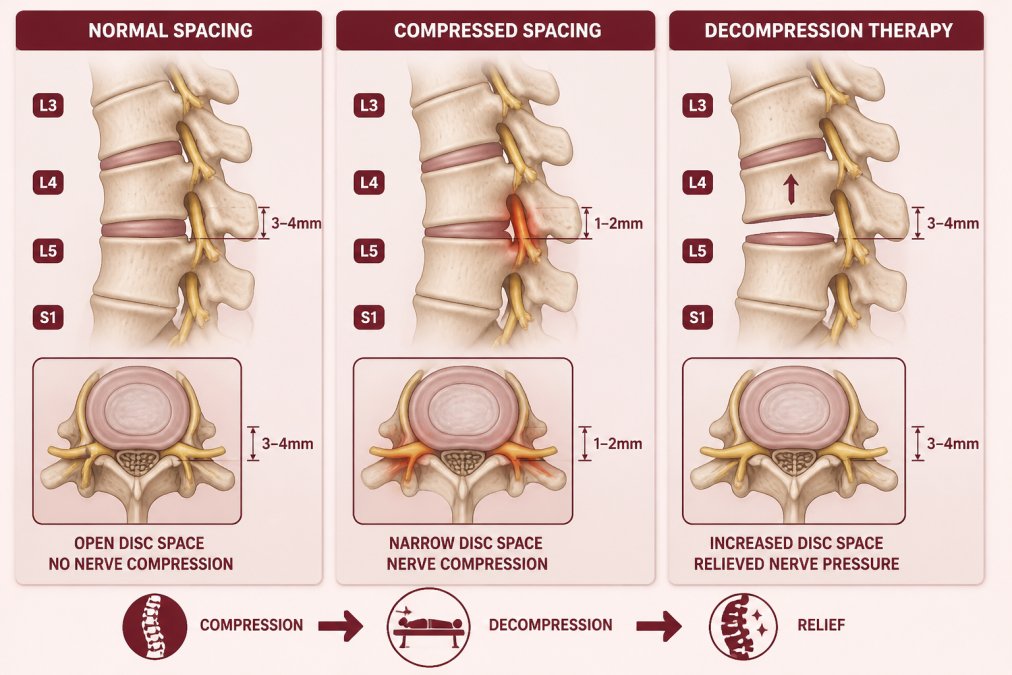
The mechanics of spinal decompression therapy center on creating negative intradiscal pressure, the opposite of the compression that causes pain. When you sit, stand, or experience stress, your discs are under constant pressure. Over time, this pressure can cause discs to bulge, herniate, or degenerate, pressing on nerve roots and causing radiating pain, numbness, or weakness.
During a spinal decompression therapy session, you lie on a specialized treatment table. The equipment gently pulls the spine in a controlled manner, creating space between the vertebrae. This negative pressure encourages the nucleus pulposus (the gel-like center of the disc) to move back toward its normal position, away from nerve roots.
The therapy works best when combined with other treatments. Many patients benefit from pairing spinal decompression with chiropractic adjustments, physical therapy, or regenerative medicine approaches. At Alpha Total Health, we customize your treatment plan based on your unique condition and health goals. The negative pressure created during decompression can also improve nutrient diffusion into the disc, potentially supporting the healing process over time.
Treatment sessions usually last 20-45 minutes, and the number of sessions varies depending on your condition's severity and how your body responds. Some patients experience relief after just a few sessions, while others require a longer course of treatment to achieve lasting results. The key is consistency, regular sessions allow the therapeutic effects to accumulate.
Spinal Decompression Therapy for Herniated Disc
A herniated disc occurs when the outer layer of a spinal disc tears, allowing the inner material to push outward and press on nearby nerves. This is one of the most common conditions that responds well to spinal decompression therapy.
Spinal decompression therapy for herniated disc works by creating enough negative pressure to pull the herniated material back into the disc space. This relieves pressure on the nerve root, reducing pain and allowing inflammation to subside. Many people in Lady Lake who have struggled with herniated disc pain find that decompression therapy offers meaningful relief without surgical intervention.
The effectiveness of spinal decompression therapy for herniated disc often depends on the disc's location, the degree of herniation, and how long the condition has existed. Discs that have recently herniated typically respond better than those with long-standing, severe degeneration. However, even chronic cases can improve with consistent treatment combined with proper rehabilitation exercises and lifestyle modifications.
Patients often notice improvement in symptoms within the first 1-2 weeks of treatment, though full recovery may take several weeks or months. During this time, it's important to avoid activities that re-aggravate the condition. Our team at Alpha Total Health works with you to develop a complete recovery plan that includes home exercises, posture correction, and activity modification to support the healing process.
Conditions That May Respond to Spinal Decompression
Beyond herniated discs, spinal decompression therapy can help with various spine-related conditions. Degenerative disc disease, where discs lose water content and height over time, often responds well to decompression. This condition is common in active retirees in Lady Lake and The Villages who have maintained physically demanding lifestyles.
Sciatica, pain radiating down the leg from compression of the sciatic nerve, frequently improves with spinal decompression therapy. Patients with sciatica often describe burning, tingling, or sharp pain running from the lower back through the buttock and down the leg. Decompression can relieve this pain by reducing pressure on the nerve root at its source.
Facet syndrome, stenosis (narrowing of the spinal canal), and post-surgical scar tissue can also benefit from decompression therapy. Some patients experience relief from general chronic back pain when nerve compression is a contributing factor. The therapy is particularly effective for conditions where imaging confirms nerve root compression or disc bulging.
Neuropathy sufferers seeking to regain mobility and reduce nerve pain may find spinal decompression therapy helpful, especially when the neuropathy stems from spinal compression. Each condition requires individual assessment to determine whether decompression is appropriate. At Alpha Total Health, our evaluation process helps identify whether your specific condition is likely to respond to this therapy.
Spinal Decompression vs Traction: Key Differences
Many people confuse spinal decompression therapy with traditional traction, but they are not the same. Traditional traction applies a constant, steady pull to the spine. Spinal decompression therapy, by contrast, uses computerized equipment to apply intermittent cycles of distraction and relaxation with precise force calculations.
The key difference lies in control and specificity. Spinal decompression therapy adjusts the force based on your body's feedback and resistance. When muscles tense (a protective reflex), the equipment reduces force to avoid triggering that reflex. This intelligent cycling allows deeper decompression than traditional traction can achieve. Traditional traction, while beneficial for some patients, typically applies the same force throughout the session without this adaptive response.
Another distinction is the angle and direction of pull. Spinal decompression therapy can target specific disc levels and apply force at precise angles to maximize the therapeutic effect on problem areas. Traditional traction is often more general, pulling the entire spine in one direction. For patients with herniated discs or specific nerve compression, this targeted approach often delivers better results.
Duration and intensity also differ. Spinal decompression therapy sessions follow a specific protocol designed to achieve therapeutic decompression without causing tissue damage. The cycles of distraction and relaxation are calculated to create optimal negative pressure. Traditional traction sessions may be longer but often lack this sophisticated cycling pattern.
How Long Does Spinal Decompression Therapy Take?
The duration of spinal decompression therapy varies significantly based on your condition's severity, how long you've had the problem, and how your body responds to treatment. Most treatment courses involve multiple sessions over several weeks. A typical course might range from 12-20 sessions, though some patients see benefit with fewer sessions, while others require more.
Each individual session typically lasts 20-45 minutes, though the actual decompression time is usually 20-30 minutes. The remaining time involves setup, assessment, and any complementary treatments your care plan includes. Sessions are usually scheduled 2-5 times per week, depending on your condition and recovery response.
The timeline for experiencing relief also varies. Some patients notice improvement in pain levels within the first week of treatment. Others may require 3-4 weeks of consistent therapy before significant relief develops. Chronic conditions that have existed for years often take longer to resolve than acute problems. Patience and consistency are important, stopping treatment too early may prevent you from reaching the full benefit.
After completing your initial course of treatment, some patients maintain their improvement with occasional maintenance sessions. Others may not need further treatment if their condition has fully resolved. At Alpha Total Health, we monitor your progress throughout treatment and adjust the plan as needed. Our $49 Spinal Disc Decompression evaluation helps us determine the likely timeline for your specific situation.
What to Expect During Treatment Sessions
When you arrive for a spinal decompression therapy session, our team will review any changes in your symptoms since your last visit. You'll lie on the decompression table, which is specially designed to distribute pressure evenly across your body. Depending on your condition, you may lie face-up or face-down, positioning is customized to target the affected disc level.
The equipment is then positioned to apply gentle traction forces. You'll feel a slow, progressive pull as the decompression cycle begins. Most patients describe the sensation as mild stretching rather than pain. The cycles of distraction and relaxation continue throughout the session. You'll remain conscious and comfortable throughout, able to communicate with our staff if you need any adjustments.
During the session, many patients relax, read, or listen to music. Some experience immediate relief, while others notice gradual improvement over multiple sessions. After the session ends, you can typically resume normal activities. Some patients experience mild soreness similar to after a workout, which usually resolves within a day or two.
Our team at Alpha Total Health monitors your response to each session and makes adjustments to the treatment protocol as needed. We may combine spinal decompression therapy with other treatments like focused shockwave therapy or chiropractic adjustments to optimize your results. Communication is key, let us know how you're responding so we can refine your care plan.
Spinal Decompression Therapy Risks and Side Effects
While spinal decompression therapy is generally well-tolerated, it's important to understand potential risks and side effects. Most side effects are mild and temporary. Some patients experience temporary muscle soreness after sessions, similar to the feeling after beginning a new exercise program. This typically resolves within 24-48 hours.
Temporary increase in pain can occur in some cases, particularly during the first few sessions. This usually indicates that tissues are responding to the decompression. Our team monitors this closely and may adjust treatment intensity if necessary. Mild tingling or numbness during or after treatment sometimes occurs as nerves adjust to reduced compression.
More serious complications are rare but possible. Patients with certain spinal conditions, such as severe osteoporosis or spinal fractures, may not be appropriate candidates for decompression therapy. Those with metal implants in the spine require careful assessment. Pregnancy is generally considered a contraindication for spinal decompression therapy.
Some patients experience temporary headaches or neck stiffness after sessions, particularly if upper spine decompression is involved. These effects are usually mild and short-lived. It's important to discuss your complete medical history with our team at Alpha Total Health so we can identify any contraindications before beginning treatment. Our comprehensive evaluation process helps ensure your safety throughout therapy.
Who Is a Good Candidate?
Good candidates for spinal decompression therapy typically have documented nerve compression confirmed by imaging studies like MRI or CT scans. If you're experiencing radiating pain, numbness, tingling, or weakness in your arms or legs related to a disc problem, you may be a candidate. Active retirees in Lady Lake and The Villages who want to maintain their lifestyle without surgery often find spinal decompression therapy appealing.
Patients who have not responded adequately to conservative treatments like physical therapy, chiropractic care, or anti-inflammatory medications may benefit from decompression therapy. Those seeking an alternative to surgery or long-term pain medication are frequently good candidates. If you've been told surgery is your only option but prefer to try non-surgical approaches first, spinal decompression therapy is worth exploring.
Golfers experiencing hip or back pain that limits their swing, neuropathy sufferers seeking improved mobility, and individuals with chronic musculoskeletal issues are often good candidates. The therapy works best for people committed to following their treatment plan consistently and combining decompression with supportive care like exercise and lifestyle modifications.
Your age is not necessarily a barrier. Many patients in their 60s, 70s, and beyond respond well to spinal decompression therapy. What matters more is your overall health status and the specific nature of your spinal condition. Our evaluation process at Alpha Total Health determines whether you're a good candidate based on your individual circumstances.
Who Should Not Pursue Spinal Decompression
Certain conditions and situations make spinal decompression therapy inappropriate. Patients with severe osteoporosis or bone density issues may not be suitable candidates, as the traction forces could potentially cause harm. Those with unstable spinal fractures or recent spinal surgery typically need to wait before beginning decompression therapy.
Pregnancy is generally a contraindication for spinal decompression therapy. The positioning and forces involved are not appropriate during pregnancy. Patients with metal implants in the spine, such as certain types of fusion hardware, may not be candidates, though some modern implants are compatible with decompression therapy.
Severe spinal stenosis with significant myelopathy (spinal cord compression causing neurological deficits) may require surgical intervention rather than decompression therapy. Patients with severe, progressive neurological symptoms like loss of bowel or bladder control need immediate medical evaluation and may not be appropriate for decompression. Those with active infections in the spine or significant inflammatory conditions require different treatment approaches.
If you have multiple complex spinal problems or severe degeneration throughout the spine, decompression therapy may offer limited benefit. Patients with uncontrolled medical conditions or those taking certain medications may need medical clearance before beginning treatment. Our comprehensive evaluation at Alpha Total Health helps identify whether decompression therapy is appropriate for your situation or whether alternative approaches might serve you better.
Recovery and Results Timeline
Most patients begin experiencing noticeable improvement within 1-3 weeks of starting spinal decompression therapy. Initial relief often comes as inflammation decreases and nerve pressure reduces. However, complete healing of disc material and nerve tissue takes longer. Many patients continue improving throughout their treatment course and into the weeks following completion.
The recovery timeline depends on your condition's duration and severity. Acute problems, those that developed recently, often resolve more quickly than chronic conditions. A patient with a recent disc herniation might see significant improvement within 4-6 weeks. Someone with degenerative disc disease that has existed for years may require 8-12 weeks or longer to achieve optimal results.
After completing your treatment course, continued improvement often occurs over the following weeks and months as tissues heal and inflammation continues to resolve. Many patients maintain their improvements long-term, particularly if they incorporate the exercises and lifestyle modifications recommended by our team. Some conditions may require occasional maintenance sessions to prevent symptom recurrence.
Results vary from person to person. Some patients experience complete resolution of symptoms, while others achieve significant improvement that allows them to return to their desired activities with minimal limitations. The key factors influencing outcomes include your commitment to the treatment plan, compliance with home exercises, and lifestyle modifications that support spinal health. At Alpha Total Health, we work with you throughout your recovery to optimize your results.
Common Questions About Spinal Decompression Therapy
Is spinal decompression therapy covered by insurance? Insurance coverage varies by plan and provider. Many insurance companies cover spinal decompression therapy when it's medically necessary and conservative treatments have been exhausted.
How quickly will I feel better? Most patients notice some improvement within the first 1-2 weeks, though dramatic improvement typically takes 3-6 weeks. Some patients experience immediate relief during their first session, while others require several sessions before noticing changes.
Can spinal decompression therapy cure my condition? Spinal decompression therapy can provide significant relief and allow tissues to heal, but whether it "cures" your condition depends on your specific problem.
Do I need to take time off work? Most patients can continue working during spinal decompression therapy. Sessions are outpatient procedures, and you can typically resume normal activities immediately after.
What happens if spinal decompression therapy doesn't work for me? If you don't experience improvement after 4-6 weeks of consistent treatment, our team will reassess your condition and discuss alternative approaches.
Can spinal decompression therapy be combined with other treatments? Yes. In fact, combining spinal decompression with chiropractic adjustments, physical therapy, or regenerative medicine often produces better results than decompression alone.
Chronic spine pain doesn't have to limit your quality of life or force you into surgery. If you're experiencing nerve compression, disc problems, or radiating pain, spinal decompression therapy may offer the relief you're seeking.
Frequently Asked Questions
What is spinal decompression therapy and how does it differ from other back pain treatments?
Spinal decompression therapy is a non-surgical treatment that uses mechanical traction to gently stretch the spine, reducing pressure on compressed nerves and discs. Unlike manual chiropractic adjustments or physical therapy exercises, spinal decompression therapy employs specialized equipment to apply precise, controlled force over time. The goal is to create negative pressure within the disc space, allowing bulging or herniated disc material to retract and relieving nerve compression that causes pain, numbness, and weakness.
How many spinal decompression therapy sessions are typically needed?
Treatment plans vary based on the severity of your condition and how your body responds. Your provider will assess your progress and adjust the plan accordingly. Some patients experience relief within the first few sessions, while others require the full course of treatment to see significant improvement. Consistency with the prescribed schedule is important for optimal results.
What are the main risks and side effects of spinal decompression therapy?
Spinal decompression therapy is generally well-tolerated, but some patients experience temporary mild discomfort, muscle soreness, or fatigue similar to after exercise. Rare complications include temporary increase in pain or nerve irritation. It is not appropriate for patients with certain conditions, including pregnancy, severe osteoporosis, or active infections. A thorough evaluation by a qualified healthcare provider is essential to determine whether spinal decompression therapy is safe and suitable for your specific situation.
Is spinal decompression therapy painful?
Most patients do not experience pain during spinal decompression therapy. The treatment involves a gentle, progressive stretch applied over 20 to 30 minutes. You may feel slight traction or mild stretching sensations, but this should not be painful. If you experience sharp pain or significant discomfort during treatment, inform your provider immediately. They can adjust the settings or modify the protocol. The goal is to relieve pain, not cause it, so communication with your healthcare team is essential.
Can spinal decompression therapy work for people over 60 or with long-standing back problems?
Yes, spinal decompression therapy can be effective for older adults and those with chronic conditions. Age alone does not disqualify someone from treatment. However, certain age-related factors such as severe osteoporosis, advanced degenerative disc disease, or multiple spinal fusion surgeries may affect candidacy. A comprehensive evaluation, which may include imaging and medical history review, helps determine whether spinal decompression therapy is appropriate for your situation. Many retirees and older adults benefit from this non-surgical approach to managing chronic back and neck pain.
What is the difference between spinal decompression therapy and spinal traction?
While both techniques use traction principles, spinal decompression therapy employs computerized, motorized equipment that applies precise, graduated force with specific timing protocols designed to create negative pressure within discs. Traditional spinal traction is a simpler, often manual technique that applies sustained or intermittent stretching force. Spinal decompression therapy is more targeted and controlled, with treatment parameters customized to your condition. Traction may be part of general physical therapy or chiropractic care. A qualified provider can explain which approach is most appropriate for your diagnosis.
When should I see a healthcare provider about my back pain instead of trying self-care?
Seek professional evaluation if back pain persists beyond two weeks, is severe or worsening, is accompanied by numbness, tingling, or weakness in your legs, or follows an injury or fall. Pain that interferes with daily activities, sleep, or work warrants a professional assessment. Early evaluation helps identify the underlying cause and prevents complications. A qualified chiropractor or physician can perform a thorough examination and determine whether spinal decompression therapy or another treatment is appropriate for your condition.
How do I know if spinal decompression therapy will work for my specific condition?
The best way to determine if spinal decompression therapy is right for you is through a professional evaluation by a qualified provider. They will review your medical history, perform a physical examination, and may recommend imaging to assess your spine's condition. Based on this assessment, your provider can discuss whether spinal decompression therapy is likely to help and what outcomes you might realistically expect. Many providers offer an initial consultation to discuss your symptoms, goals, and treatment options before you commit to a full treatment plan.