
 how-to
Chiropractic Adjustments for Golfers' Back Pain: A How-To Guide
Table of Contents
- Why Golfers Experience Back Pain
- How Chiropractic Adjustments Help Golfers' Back Pain
- Common Chiropractic Techniques for Golf-Related Back Pain
- How to Reduce Inflammation in the Body Through Chiropractic Care
- Golf Injury Prevention Exercises to Complement Your Treatment
- Chiropractic Care for Sports Performance: Staying Active on the Course
- Choosing the Right Chiropractor for Your Needs
- Frequently Asked Questions
Last Updated: October 2, 2026
Why Golfers Experience Back Pain
Golfers face a unique challenge when it comes to back pain. The golf swing involves a complex rotation of the spine, twisting at high speeds, and sudden deceleration ([Low back pain and golf: A review of biomechanical risk factors](https://pmc.ncbi.nlm.nih.gov/articles/PMC9219256/)). This puts enormous stress on the discs, joints, and muscles in your lower back.
The problem is especially common among golfers in Lady Lake and the surrounding area who play frequently. Repetitive swinging, poor posture between shots, and the asymmetrical nature of golf (most golfers swing one direction) all contribute to injury. Many golfers don't realize how much their swing mechanics affect their spine until pain develops.
What makes golf-related back pain different is that it often builds gradually. You might feel fine for months, then one swing triggers sharp pain. By that point, inflammation has usually been building for weeks or longer. The good news: chiropractic adjustments for golfers back pain can address both the immediate pain and the underlying mechanical issues causing it.
How Chiropractic Adjustments Help Golfers' Back Pain
Chiropractic adjustments for golfers' back pain work by restoring proper alignment to your spine and improving mobility. When vertebrae shift out of position, they restrict movement and irritate nerves. An adjustment realigns these vertebrae, reducing nerve irritation and allowing healing to begin.
For golfers specifically, adjustments do something crucial: they restore the range of motion you need for a full swing. A golfer with restricted spinal mobility will compensate by putting extra stress on muscles and ligaments. This compensation pattern is what leads to injury.
At Alpha Total Health in Lady Lake, we focus on identifying the root cause of your pain, not just treating the symptom. With over 29 years of clinical experience, our founder-led approach means you get direct care from someone who understands golf-related injuries.
The adjustment process typically involves:
- Assessment of your spinal alignment and mobility
- Identification of restricted segments causing pain
- Precise adjustment to restore normal movement
- Follow-up care to prevent the problem from returning
Regular adjustments also help prevent future injuries by keeping your spine in optimal alignment for golf.
Common Chiropractic Techniques for Golf-Related Back Pain
Spinal Manipulation and Mobilization
Spinal manipulation is the most direct treatment for misaligned vertebrae. The chiropractor applies controlled force to a joint that has lost normal movement. This restores mobility and reduces pain almost immediately for many patients.
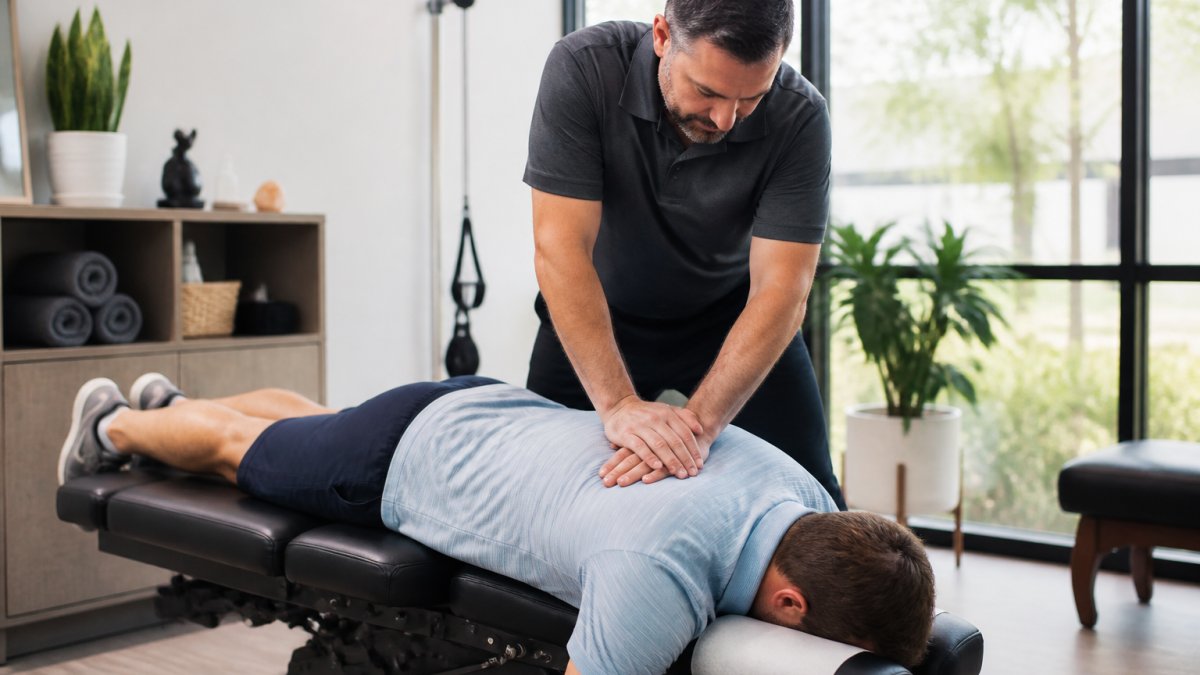
Mobilization is gentler than manipulation. Instead of a quick adjustment, the chiropractor moves the joint slowly through its range of motion. This approach works well if you have severe pain or if your body needs a more gradual approach to healing.
Both techniques address the mechanical restriction that's limiting your golf swing.
Soft Tissue Therapy
Your muscles, tendons, and ligaments work together with your spine. When they're tight or inflamed, they pull your spine out of alignment and restrict movement. Soft tissue therapy targets these structures directly.
Common techniques include:
- Myofascial release (breaking up tight muscle knots)
- Trigger point therapy (releasing painful muscle points)
- Stretching and mobilization of tight muscles
- Massage to reduce inflammation
For golfers, soft tissue work is essential. Your golf swing uses muscles from your feet all the way up your spine. Tightness anywhere in this chain affects your swing mechanics and increases injury risk.
Postural Correction
Poor posture between shots is a hidden cause of golf back pain. Many golfers slouch while waiting their turn or bend incorrectly while retrieving their ball. Over time, these small postural habits create cumulative stress.
A chiropractor will assess your posture and show you how to stand, sit, and bend correctly. Small changes make a big difference. Proper posture reduces the load on your spine by distributing stress evenly across multiple joints and muscles.
Postural correction also improves your swing mechanics. Standing taller and straighter naturally improves your rotation and balance during the swing.
How to Reduce Inflammation in the Body Through Chiropractic Care
Inflammation is the root cause of most golf-related back pain. Chiropractic adjustments reduce inflammation by restoring normal movement and reducing nerve irritation. When your spine moves properly, your body stops producing excess inflammatory chemicals.
Here's how the process works:
- Restricted spinal joints trigger inflammation as your body tries to stabilize them
- Adjustments restore normal movement, signaling your body that stability is restored
- Inflammation decreases naturally as your nervous system relaxes
- Pain diminishes as inflammation reduces
Beyond adjustments, inflammation control involves lifestyle changes. Many golfers find that combining chiropractic care with proper rest, hydration, and gentle stretching can support recovery. (Source: prevalence of back pain among athletes)
The timeline for inflammation reduction varies. Some individuals may feel relief within days, while others may require a longer period of consistent care. Your chiropractor will monitor your progress and adjust treatment as needed.
Golf Injury Prevention Exercises to Complement Your Treatment
Chiropractic adjustments for golfers back pain work best when combined with targeted exercises. These movements strengthen the muscles that support your spine and improve your swing mechanics.
Essential exercises for golfers include:
Core strengthening:
- Planks (hold 30-60 seconds, rest, repeat 3 times)
- Bird dogs (opposite arm and leg extensions, 10 per side)
- Dead bugs (lying on back, extend opposite arm and leg, 10 per side)
Rotation and mobility:
- Thoracic rotations (sit upright, gently twist side to side, 10 per side)
- Cat-cow stretches (on hands and knees, alternate arching and rounding spine, 10 reps)
- Standing trunk rotations (feet shoulder-width apart, rotate torso gently, 10 per side)
Hip and hamstring flexibility:
- Pigeon pose (deep hip stretch, hold 30 seconds per side)
- Hamstring stretches (bend forward gently, hold 30 seconds)
- Hip flexor stretches (lunge position, hold 30 seconds per side)
Start slowly with these exercises. If any movement causes sharp pain, stop and ask your chiropractor before continuing. The goal is to build strength and flexibility gradually, not to push through pain.
Chiropractic Care for Sports Performance: Staying Active on the Course
Beyond pain relief, chiropractic adjustments improve your golf performance. Better spinal mobility directly translates to a more powerful, efficient swing.
Improved performance comes from several factors:
- Better rotation: A mobile spine rotates more fully, increasing club head speed
- Reduced compensations: When your spine works properly, your muscles can focus on power instead of stability
- Improved balance: Proper spinal alignment improves your center of gravity during the swing
- Fewer missed shots: Reduced pain means better focus and consistency
Regular chiropractic maintenance keeps you performing at your best. Many serious golfers get adjusted monthly to prevent problems before they start. This preventive approach is far more effective than waiting until pain forces you to take time off the course.
Chiropractic care for sports performance isn't just about treating injury. It's about optimizing your body's mechanics so you can play your best golf.
Choosing the Right Chiropractor for Your Needs
Not all chiropractors have experience with golf-related injuries. When choosing a chiropractor near you in Lady Lake, look for specific qualifications and experience.
Key factors to consider:
- Experience with golfers: Ask about their experience with golf-related injuries
- Founder-led practice: A practice led by the founder often provides more personalized, experienced care
- Clinical experience:
- Consultation process: A good chiropractor will spend time understanding your goals, not just your pain
- Treatment planning: They should explain your treatment plan and expected timeline clearly
Alpha Total Health offers a New Patient Consultation Package specifically designed to introduce you to our approach. This consultation lets you experience our care before committing to a full treatment plan. Our founder-led practice draws on over 29 years of clinical experience treating patients in Lady Lake and the surrounding area.
During your consultation, a good chiropractor will:
- Assess your spinal alignment and mobility
- Discuss your golf goals and how pain limits you
- Explain what's causing your pain in clear terms
- Outline a specific treatment plan with expected outcomes
- Answer all your questions about the process
The right chiropractor becomes a partner in your health, not just someone who treats your pain when it flares up.
Back pain doesn't have to end your golf game. Chiropractic adjustments address the root mechanical problems that cause pain, restore your mobility, and help you play better golf. At Alpha Total Health in Lady Lake, our founder-led team combines over 29 years of clinical experience with a deep understanding of golf-related injuries.
Frequently Asked Questions
Can chiropractic adjustments help with lower back pain from golf?
Yes. Chiropractic adjustments address the misalignments and restricted movement that develop from the repetitive twisting and bending of a golf swing. By restoring proper spinal alignment and mobility, adjustments reduce nerve irritation and muscle tension that cause lower back pain. Most golfers notice improved comfort and range of motion, though results vary based on the severity of your condition and how consistently you follow your treatment plan.
How often should golfers get chiropractic adjustments?
Frequency depends on your pain level, activity intensity, and how your body responds to treatment. Active golfers with acute pain may benefit from 2-3 visits per week initially, while those managing chronic pain might visit weekly or biweekly. Your chiropractor will assess your condition during your consultation and recommend a schedule tailored to your goals. Some golfers maintain results with monthly maintenance visits once acute pain resolves.
What causes back pain in golfers?
Golf's rotational mechanics place significant stress on the spine. The downswing generates forces through your lower back, while poor posture and muscle imbalances in your core, hips, and shoulders increase strain. Repetitive motion without proper conditioning or warm-up tightens muscles, restricts spinal mobility, and can irritate nerves. Limited flexibility, weak stabilizing muscles, and previous injuries also make golfers more vulnerable to back pain.
Are chiropractic adjustments safe for seniors playing golf?
Chiropractic adjustments are generally safe for older adults when performed by a qualified chiropractor who understands age-related conditions like osteoarthritis or reduced bone density. Your chiropractor will take a detailed health history, assess your spine carefully, and adjust techniques accordingly. Some seniors benefit from gentler mobilization methods rather than high-velocity adjustments. Always discuss your age, medical history, and any medications with your chiropractor before treatment begins.