
 how-to
Is Walking Good for Chronic Back Pain?
Table of Contents
- Is Walking Good for Chronic Back Pain?
- How Walking Helps Back Pain Relief
- Creating a Walking Plan for Back Pain
- How Long to Walk with Lower Back Pain
- Can Walking Worsen Back Pain?
- Walking Posture for Back Pain
- Common Walking Mistakes to Avoid
- When to Stop Walking and Seek Professional Help
- Conclusion
- Frequently Asked Questions
Last Updated: October 18, 2026
Is Walking Good for Chronic Back Pain?
Walking is one of the most effective ways to manage chronic back pain, and the answer to whether is walking good for chronic back pain is a resounding yes. It strengthens your core, improves flexibility, and reduces stiffness without putting excessive strain on your spine. Many people with chronic back pain find that regular walking helps them stay active and maintain their quality of life.
At Alpha Total Health in Lady Lake, we work with patients every day who discover that walking transforms their pain management approach. The key is starting slowly and building a sustainable routine that works for your body.
But here's what most people get wrong: they either avoid walking entirely out of fear, or they overdo it and make things worse. The truth is somewhere in the middle. Walking can be incredibly beneficial when done correctly, but it requires a thoughtful plan tailored to your specific condition.
How Walking Helps Back Pain Relief
Walking reduces back pain through several mechanisms. It increases blood flow to your spine and surrounding muscles, which promotes healing and reduces inflammation. Movement also releases endorphins, your body's natural pain-relieving chemicals.
Regular walking strengthens the muscles that support your spine:
- Core muscles stabilize your lower back
- Leg muscles reduce stress on your spine
- Back muscles become more resilient
Walking also improves posture over time. Better posture means less strain on your discs and joints.
Walking is low-impact, meaning it doesn't jar your spine like running does. This makes it ideal for people with degenerative conditions or chronic pain. You can walk at your own pace and stop whenever you need to.
Creating a Walking Plan for Back Pain
A walking plan for back pain should be gradual and personalized. Start with short distances and increase slowly over several weeks.
Week 1-2: Walk 10-15 minutes, 3 days per week. Choose a comfortable pace where you can still talk.
Week 3-4: Increase to 15-20 minutes, 3-4 days per week.
Week 5-6: Aim for 20-30 minutes, 4-5 days per week.
Week 7+: Maintain 30 minutes, 5 days per week, or adjust based on how you feel.
Listen to your body. If you feel increased pain during or after walking, scale back. Pain that lasts more than 2 hours after exercise means you did too much.
Many patients benefit from working with a healthcare provider to design their specific plan. A provider can identify any movement patterns that might worsen your pain and help you adjust. If you're ready to get professional guidance on your walking strategy and overall back pain management, consider scheduling a New Patient Consultation Package at Alpha Total Health to assess your condition and create a personalized plan.
How Long to Walk with Lower Back Pain
The ideal duration for walking with lower back pain depends on your current fitness level and pain severity. Most people should start with 10-15 minutes and gradually increase.
Beginners: 10-15 minutes per session is a good starting point.
Intermediate: 20-30 minutes per session is sustainable for most people.
Advanced: 30-45 minutes per session, if your body tolerates it well.
How long to walk with lower back pain also depends on frequency. Three 20-minute walks spread across the week is often better than one long walk. This gives your body time to recover between sessions.
Pay attention to how your back feels during the walk. If pain increases significantly, stop and rest. Mild discomfort that improves as you warm up is normal. Sharp or shooting pain is a signal to stop.
Track your walking duration and how you feel afterward. Keep a simple log for 2-3 weeks. You'll notice patterns that help you find your optimal duration.
Can Walking Worsen Back Pain?
Walking can worsen back pain if you do too much too soon or if your form is poor. This is why starting gradually is so important.
Common reasons walking worsens pain:
- Doing too much: Increasing distance or frequency too quickly overwhelms your muscles
- Poor posture: Slouching or leaning puts extra stress on your spine
- Wrong footwear: Unsupportive shoes don't absorb impact properly
- Uneven surfaces: Steep hills or rough terrain strain your back
- Ignoring warning signs: Pushing through pain instead of resting
Can walking worsen back pain? Yes, but only when these mistakes happen. The solution is simple: progress slowly, focus on form, and listen to your body.
Most people who experience increased pain during walking made one of these errors. They didn't give their body enough time to adapt. Once they slow down and focus on proper technique, pain usually decreases.
If walking consistently worsens your pain after 2-3 weeks, talk to a healthcare provider. You may need a different approach or treatment plan.
Walking Posture for Back Pain
Your posture while walking is critical. Poor form can cancel out the benefits of walking and actually increase pain.
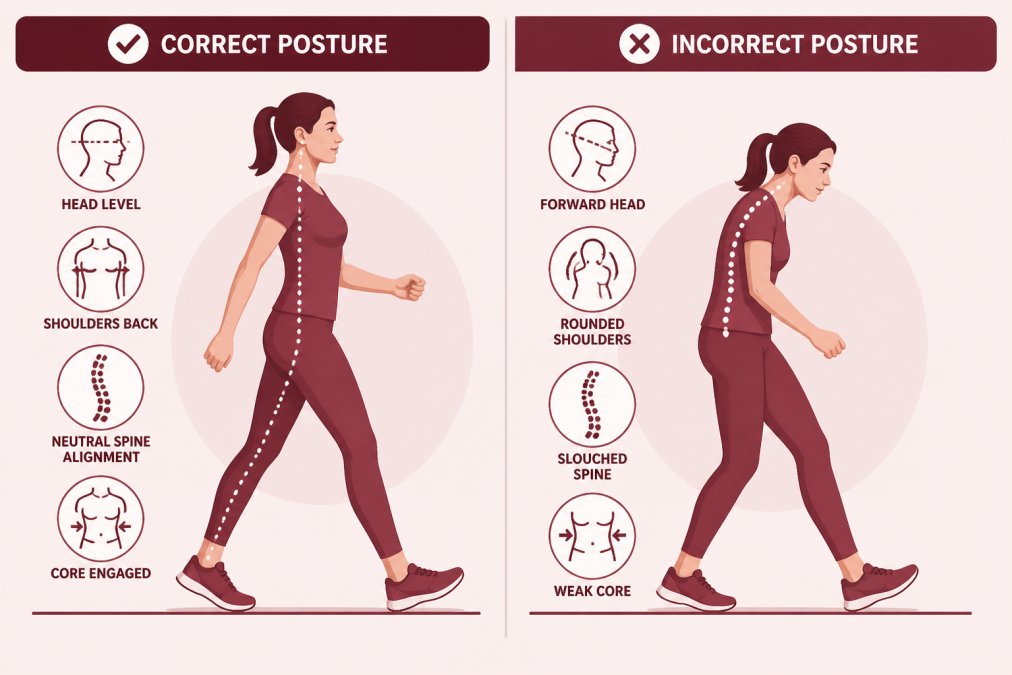
Correct walking posture includes:
- Head level and looking forward, not down
- Shoulders relaxed and back, not hunched
- Spine neutral, not arched or slouched
- Core muscles gently engaged
- Arms swinging naturally at your sides
- Feet landing heel first, rolling through to toe
- Knees slightly bent, not locked
Focus on one element at a time. Start by fixing your head position. Then work on shoulders. Then core engagement. Don't try to change everything at once.
Many people in Lady Lake find it helpful to walk in front of a mirror for a few minutes to check their form. You can also ask a family member to watch and give feedback.
Good posture becomes automatic after a few weeks of practice. Your muscles will remember the correct position. At that point, you can focus on other things while walking instead of constantly thinking about form.
Common Walking Mistakes to Avoid
Many people make the same mistakes that limit their progress or increase pain. Knowing what to avoid helps you stay on track.
Mistake 1: Starting too fast Jumping from no walking to 45 minutes per session overwhelms your body. Your muscles and joints need time to adapt.
Mistake 2: Walking every single day Your body needs recovery days. Rest allows muscles to repair and strengthen. Aim for 3-5 walking days per week with at least one rest day between sessions.
Mistake 3: Ignoring pain signals Mild discomfort during warm-up is normal. Sharp or shooting pain is not. Stop if pain increases significantly during your walk.
Mistake 4: Wearing unsupportive shoes Old or worn-out shoes don't absorb impact. Invest in walking shoes with good arch support and cushioning.
Mistake 5: Walking on hard surfaces only Concrete and asphalt are harder on your joints. Mix in softer surfaces like grass, tracks, or trails when possible.
Mistake 6: Skipping warm-up and cool-down Five minutes of gentle stretching before and after walking prepares your body and aids recovery.
Mistake 7: Expecting immediate results Walking benefits build over weeks and months. Don't judge your progress after just one or two walks.
When to Stop Walking and Seek Professional Help
Walking is beneficial for most people with chronic back pain, but some situations require professional evaluation.
Stop walking and contact a healthcare provider if you experience:
- Sharp or shooting pain that doesn't improve with rest
- Pain that worsens significantly after each walk
- Numbness or tingling in your legs or feet
- Loss of bladder or bowel control
- Severe pain that limits your daily activities
- Pain that radiates down one leg (possible nerve involvement)
These symptoms may indicate a condition that needs professional assessment. A healthcare provider can determine if walking is appropriate for your specific situation or if a different treatment approach is needed.
If walking alone isn't relieving your pain after 4-6 weeks of consistent effort, professional guidance can help identify what's missing. Alpha Total Health specializes in evaluating chronic back pain and creating personalized treatment plans. A $49 Spinal Disc Decompression evaluation or comprehensive assessment can help determine whether regenerative therapies and other advanced treatments would complement your walking routine and accelerate your progress.
Many patients in the Lady Lake community benefit from a combination approach: walking for daily movement plus targeted treatment to address underlying issues.
Conclusion
Walking is excellent for chronic back pain when you approach it thoughtfully. Start slowly, focus on proper form, and build gradually. Most people see improvement within 4-6 weeks of consistent walking.
The key is listening to your body and adjusting as needed. If you're struggling with chronic back pain despite regular walking, or if you want to accelerate your progress, professional evaluation can make a significant difference. Alpha Total Health in Lady Lake offers comprehensive assessments to help you determine whether walking alone is sufficient or whether additional treatment would benefit your recovery. With over 29 years of clinical experience, our founder-led team can help you create a personalized plan tailored to your specific condition. Begin your journey to optimal health with our specialized New Patient Consultation Package, designed to introduce you to our expert, welcoming approach to care.
Frequently Asked Questions
Is walking good for chronic back pain?
Walking can be beneficial for chronic back pain when done with proper form and gradually increased intensity. Low-impact walking strengthens core muscles that support your spine, improves flexibility, and promotes blood flow to affected areas. However, the key is starting slowly and listening to your body. For personalized guidance on whether walking is right for your specific condition, a consultation with a healthcare professional can help you develop a safe approach tailored to your needs.
How long should I walk with chronic back pain?
Most people with chronic back pain benefit from starting with 10-15 minute walks and gradually increasing to 30 minutes or more over several weeks. The right duration depends on your current fitness level and pain severity. Begin at a comfortable pace that allows you to maintain a conversation. If you experience increased pain during or after walking, reduce the duration and intensity. A healthcare provider can help you establish a walking plan for back pain that matches your individual tolerance and goals.
Can walking make chronic back pain worse?
Walking itself typically does not worsen chronic back pain, but improper technique or doing too much too soon can aggravate your condition. Common issues include poor posture, walking on uneven surfaces, or pushing too hard before your body is ready. Pain that increases during or lasts for hours after walking suggests you need to adjust your approach. If you experience sharp pain, numbness, or tingling, stop and consult a healthcare professional to rule out underlying issues that need different treatment.
What posture should I use when walking with back pain?
Proper walking posture for back pain includes keeping your head neutral (eyes forward), shoulders relaxed and back, chest open, and core gently engaged. Your arms should swing naturally at your sides. Take smooth, even steps and avoid leaning forward or arching your back excessively. Wear supportive, cushioned shoes on level surfaces. Avoid looking down at your phone or feet while walking. If maintaining good posture feels difficult, a healthcare provider can assess your alignment and recommend specific adjustments or strengthening exercises.